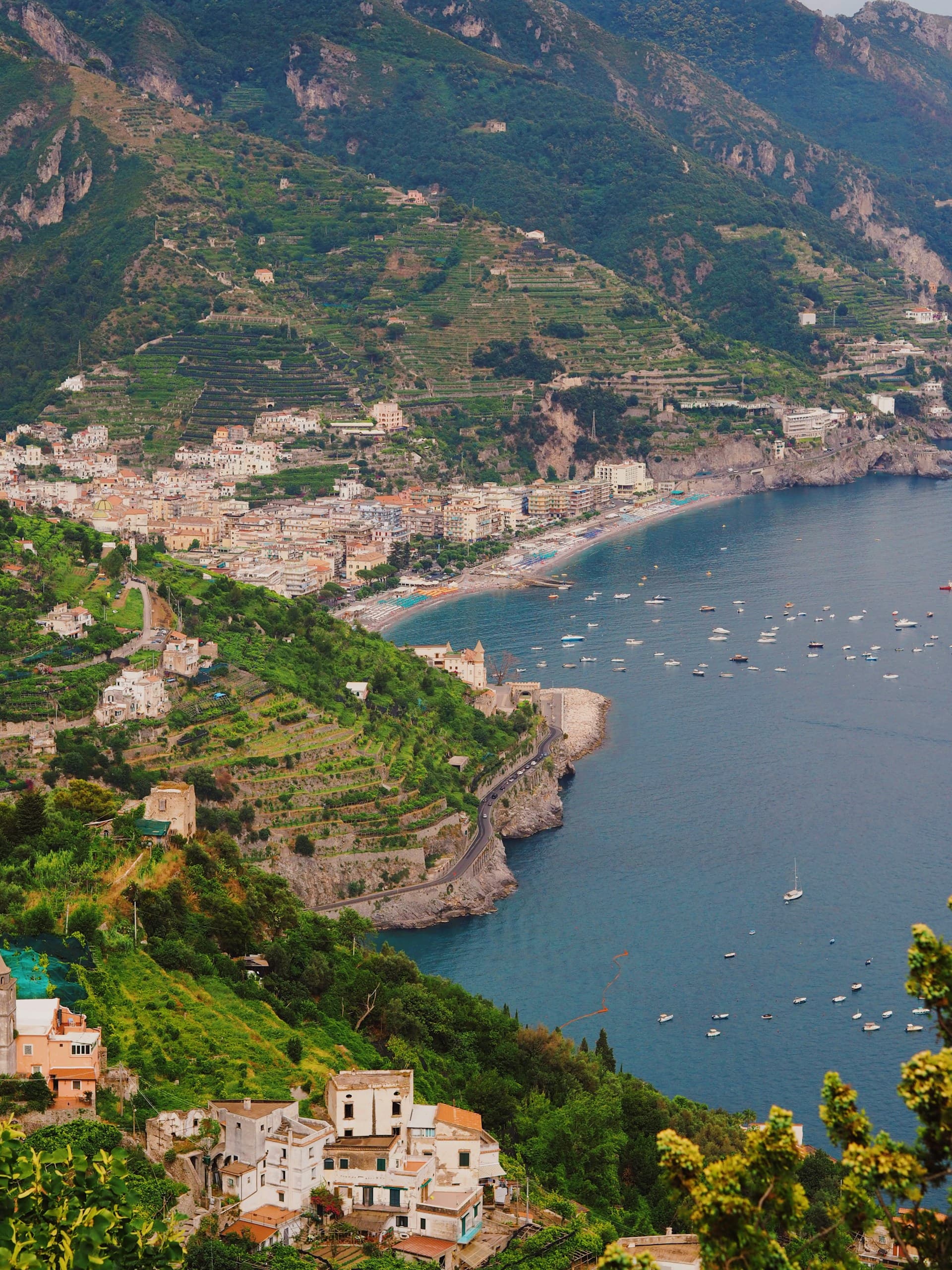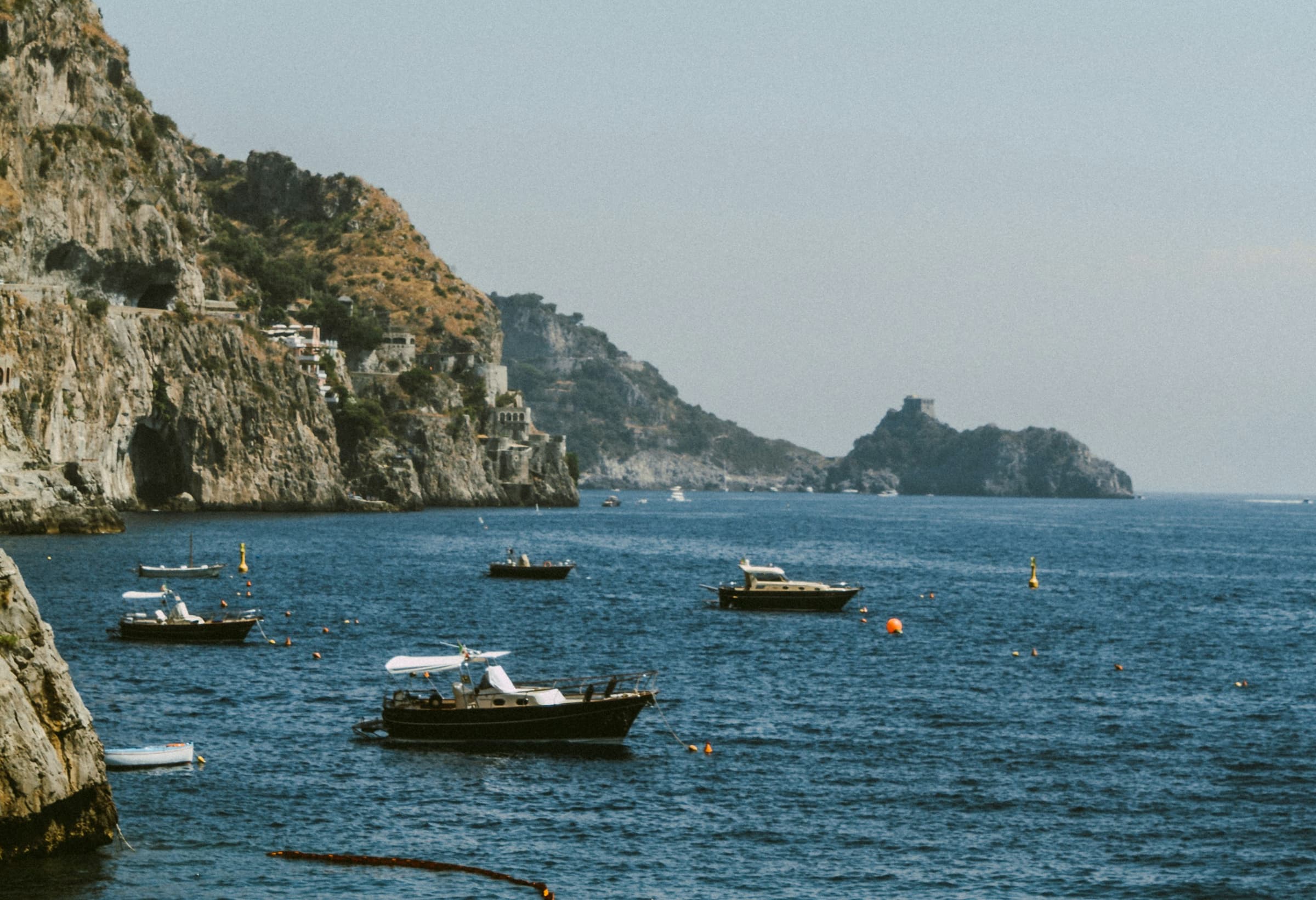
I'll say it directly: Positano is stunning, but it's also become nearly impossible to enjoy. Between May and October, you're sharing those famous pastel staircases with thousands of other visitors, paying €25 for a beach chair, and waiting 45 minutes for a table at restaurants that were average to begin with. The Amalfi Coast earned its UNESCO status for good reason—but Positano specifically has been loved almost to death.
Here's what most visitors don't realize: Italy has dozens of coastal towns with the same dramatic cliffs, colorful houses tumbling toward the sea, and that unmistakable Mediterranean magic. Some are just around the corner from Positano. Others are farther south, in regions tourists rarely consider. All of them offer what Positano used to be—authentic fishing village charm, locals who actually live there, and the chance to experience coastal Italy without fighting for space.
These are my honest recommendations for where to go instead.
Tropea: The Pearl of Calabria

If you've seen photos of a clifftop Italian town with pastel houses perched above turquoise water and thought it was Positano, there's a good chance it was actually Tropea. This town on Calabria's Costa degli Dei (Coast of the Gods) was once voted Italy's most beautiful—and unlike Positano, you can still enjoy it without fighting through crowds.
Tropea sits dramatically on limestone cliffs overlooking the Tyrrhenian Sea, with the historic center a maze of narrow streets, bougainvillea-draped balconies, and small piazzas that open to views of impossibly blue water. Below the cliffs, white sand beaches stretch along the coast—actual sand, not the pebbles you'll find on the Amalfi Coast. The town's most photographed landmark is the Sanctuary of Santa Maria dell'Isola, a medieval church perched on a rocky islet accessible by a stairway carved into the rock.
According to legend, Hercules founded Tropea during his travels across the Mediterranean. What's definitely true is that Greeks, Romans, Byzantines, and Normans all left their mark here. The town feels ancient in ways that tourist-heavy destinations have lost.
What to do: Walk to the Belvedere at Piazza del Cannone for sunset—locals gather here and it's the best viewpoint in town. Climb down to Spiaggia della Rotonda, the main beach directly below the cliffs, or head to nearby Capo Vaticano for dramatic coastal scenery and hidden coves. The water here is genuinely Caribbean-clear.
What to eat: Tropea is famous for its sweet red onions (cipolla rossa di Tropea), which show up in everything from salads to jam to gelato. Try the local 'nduja (spicy spreadable sausage) and fresh swordfish. The trattorias in the historic center are generally reliable—this isn't a tourist trap town yet.
How to get there: Fly into Lamezia Terme airport (1 hour away) or take the train—Tropea has a station on the coastal line. The town is about 90 minutes north of Scilla, so you can easily combine them.
Best time to visit: May-June or September. July and August bring Italian vacation crowds and serious heat. Many coastal hotels close in winter.
Scilla: The Positano of Calabria's Violet Coast

If I could send every tourist dreaming of Positano to one place instead, it would be Scilla. This is the town that made me realize how much of Italy remains undiscovered by international visitors.
Scilla sits on the Costa Viola (Violet Coast), at the very tip of Italy's boot where the Strait of Messina separates the mainland from Sicily. The town is divided by a rocky headland crowned with the medieval Castello Ruffo. On one side is Marina Grande, a broad sandy beach backed by pastel-colored houses climbing up the cliff. On the other side is Chianalea, an ancient fishing district where houses rise directly from the water—it's nicknamed "the Venice of the South," and for once, the comparison isn't ridiculous.
According to Homer's Odyssey, this is where the six-headed sea monster Scylla terrorized passing sailors. Today, the only thing remotely threatening is how good the swordfish is—Scilla has been a swordfishing town for over 2,000 years, and April through September is the season.
What to do: Walk through the tunnel beneath the castle to reach Chianalea. Wander the narrow alleys where waves splash against the foundations of houses. Climb up to Castello Ruffo for views across the Strait to Sicily and the Aeolian Islands on clear days. Then spend the afternoon on Marina Grande beach.
Where to eat: The swordfish panino at Civico 5 in Chianalea is legendary—they claim to have invented this street food. For a proper seafood dinner, Ristorante Glauco sits right over the water, perfect for watching the sunset.
How to get there: Scilla has a train station on the Naples-Reggio Calabria line. The nearest airport is Reggio Calabria (25 minutes away), though most budget flights go to Lamezia Terme (about 1.5 hours). The town is absolutely worth the effort to reach.
Best time to visit: May-June or September-October. July and August bring more crowds and higher temperatures, but even peak season here feels quiet compared to the Amalfi Coast.
Maratea: Basilicata's Secret Coastline

Basilicata is one of Italy's least-visited regions, which means Maratea—its only town on the Tyrrhenian coast—remains genuinely undiscovered by international tourists. Italians have been keeping this one to themselves.
The town spreads across several zones: a medieval centro storico perched in the hills with 44 churches (it's nicknamed "the city of 44 churches"), the Porto di Maratea marina, and various small beaches tucked into 30 kilometers of coastline. Overlooking everything from Monte San Biagio is a 21-meter-tall marble statue of Christ the Redeemer, similar to the famous one in Rio de Janeiro but predating it in conception. The views from up there are extraordinary—you can see the coast stretching toward both Campania and Calabria.
The beaches here are some of the cleanest and most beautiful I've seen in southern Italy. Crystal-clear water, no crowds, proper Mediterranean coastline without the tourist infrastructure that changes a place.
What to do: Drive or hike up to the Christ statue for the views and to visit the Basilica di San Biagio. Explore the historic center's winding streets. Spend time at beaches like Cala Jannita (the "black beach" with dark sand) or the beach at Fiumicello. Take a day trip to nearby Rivello, a hilltop village that looks like a nativity scene.
Where to eat: The marina has several good restaurants. Focus on fresh seafood—the local catch is excellent.
Practical details: Maratea is best reached by car, about 2 hours south of Naples on the A3 highway. There's a train station, but service is limited. Plan to stay 2-3 nights to properly explore the coastline.
Praiano: The Amalfi Coast's Quiet Middle Ground

Back on the Amalfi Coast itself, Praiano sits between Positano and Amalfi but receives a fraction of the attention. This is where Italians stay when they want the Amalfi Coast experience without the Positano chaos.
The town stretches along the cliff with views in both directions—toward Positano on one side, the Li Galli islands on the other. There's no real center in the traditional sense, which keeps the day-tripper crowds away. Instead, you get steep stairways descending to small beaches, whitewashed houses with bougainvillea, and a pace that feels genuinely relaxed.
What to do: Walk down to Marina di Praia, a small cove beach that's one of the most picturesque swimming spots on the coast. Hike the Path of the Gods (Sentiero degli Dei) which starts nearby—it's one of Italy's most spectacular coastal walks. Watch the sunset from anywhere in town; the western exposure makes this arguably the best sunset spot on the Amalfi Coast.
Where to eat: Ristorante La Brace for traditional Amalfitan cuisine with views.
Why stay here: Praiano is quieter and cheaper than Positano while maintaining easy access to the entire coast by bus or ferry. Several people I know prefer it to Positano entirely.
Ischia and Procida: The Islands Everyone Overlooks for Capri

Here's an open secret among Neapolitans: while tourists pack themselves onto ferries to Capri, we go to Ischia and Procida. They're larger (Ischia) or more intimate (Procida), significantly cheaper than Capri, and have something that famous island doesn't—authentic fishing village life and, in Ischia's case, thermal baths fed by volcanic springs that have drawn visitors since the ancient Greeks arrived 3,000 years ago.
Ischia is the largest island in the Bay of Naples, and it contains multitudes: volcanic Mount Epomeo rising in the center, beaches ranging from white sand to black volcanic grit, the medieval Castello Aragonese perched on its own rocky islet, and villages that range from lively port towns to quiet fishing hamlets that time forgot.
The village you want is Sant'Angelo, on the island's southern coast. This is Ischia's answer to Positano—a pedestrian-only fishing village with colorful houses climbing a rocky promontory, a small harbor where boats bob in clear water, and a pace so slow that locals still gather in the piazzetta each evening. Cars aren't allowed. The loudest sounds are waves and conversation. At night, the narrow streets light up and the whole village looks like something from a film set.
Procida, just 10 minutes by ferry from Ischia, is even smaller and was named Italy's Capital of Culture in 2022—the first island ever to receive the honor. At just four square kilometers, you can explore it in a day, but you'll want to stay longer. The star attraction is Marina Corricella, a 17th-century fishing village with pastel-colored houses stacked above a tiny harbor where fishermen still mend their nets. Legend says the houses were painted different colors so fishermen could recognize their homes from the sea. If that image looks familiar, it's because Procida was the filming location for Il Postino and The Talented Mr. Ripley.
Walk up to Terra Murata, the fortified medieval village at Procida's highest point, for panoramic views over the Gulf of Naples that will make you forget Capri exists. The whole island feels like the 1960s Positano that travelers describe in old travel writing—before the crowds arrived.
What to do on Ischia: Spend a morning at one of the famous thermal parks. Negombo in Lacco Ameno has pools at different temperatures surrounded by tropical gardens descending to a private beach. Poseidon Gardens near Forio is larger, with over 20 thermal pools. Entry to either runs about €35-40 and includes beach access. For free thermal bathing, head to Sorgeto Bay, where hot springs bubble up through the seabed and mix with the cool sea—you can bathe there even in winter.
Visit the white Chiesa del Soccorso in Forio, built on a promontory so sailors could see it from far out at sea—it's one of Ischia's best sunset spots.
What to do on Procida: Wander Marina Corricella without an agenda. Swim at Pozzo Vecchio beach (the "Postino Beach" from the film). Eat lunch at La Lampara overlooking the harbor. That's it. The point is to slow down.
Where to eat: Both islands have excellent, unpretentious food. Ischia is known for rabbit (coniglio all'ischitana), fresh seafood, and wines from local vineyards. Procida is famous for its sweet lemons—try them in salads. On either island, eat at the restaurants around the fishing harbors.
How to get there: Ferries and hydrofoils run frequently from Naples (Molo Beverello or Porta di Massa). Ischia Porto is 60-90 minutes depending on the boat; Procida is 35-45 minutes. The two islands are only 10 minutes apart by ferry, so you can easily visit both. Once on Ischia, buses connect all the villages, or rent a scooter. On Procida, walk—the island is tiny.
Best time to visit: April-June or September-October. The thermal parks on Ischia are open roughly mid-April through October. July and August are busy with Italian vacationers, though nothing like the Amalfi Coast crowds. Note that cars are not allowed on Procida from April through October. English isn't as widely spoken on these islands as in more touristy destinations—which is part of the charm.
The Honest Summary
Positano became famous because it genuinely is beautiful. But beauty without crowds, without €8 coffees, without waiting in line for everything—that's what these destinations still offer.
Tropea and Scilla in Calabria are the strongest visual alternatives—dramatic cliffs, colorful houses, that same Mediterranean postcard quality. Maratea takes more planning but rewards you with an Italy that feels authentic in ways the famous destinations can't anymore. Praiano gives you the actual Amalfi Coast without the peak-season insanity. And Ischia and Procida offer something entirely different: islands with thermal baths, volcanic landscapes, and fishing villages that Neapolitans have kept to themselves for generations.