Let's get the question out of the way. Yes, Calabria is safe. Safer than Naples, safer than Rome, probably safer than wherever you live. The 'Ndrangheta exists. It also has absolutely nothing to do with you. These are businessmen—ruthless ones—but their activities involve construction contracts and port logistics, not bothering tourists. I've spent weeks in Calabria over the years, driven through towns with reputations, eaten in villages where I was the only outsider. The worst thing that happened was a nonna force-feeding me a second plate of pasta.
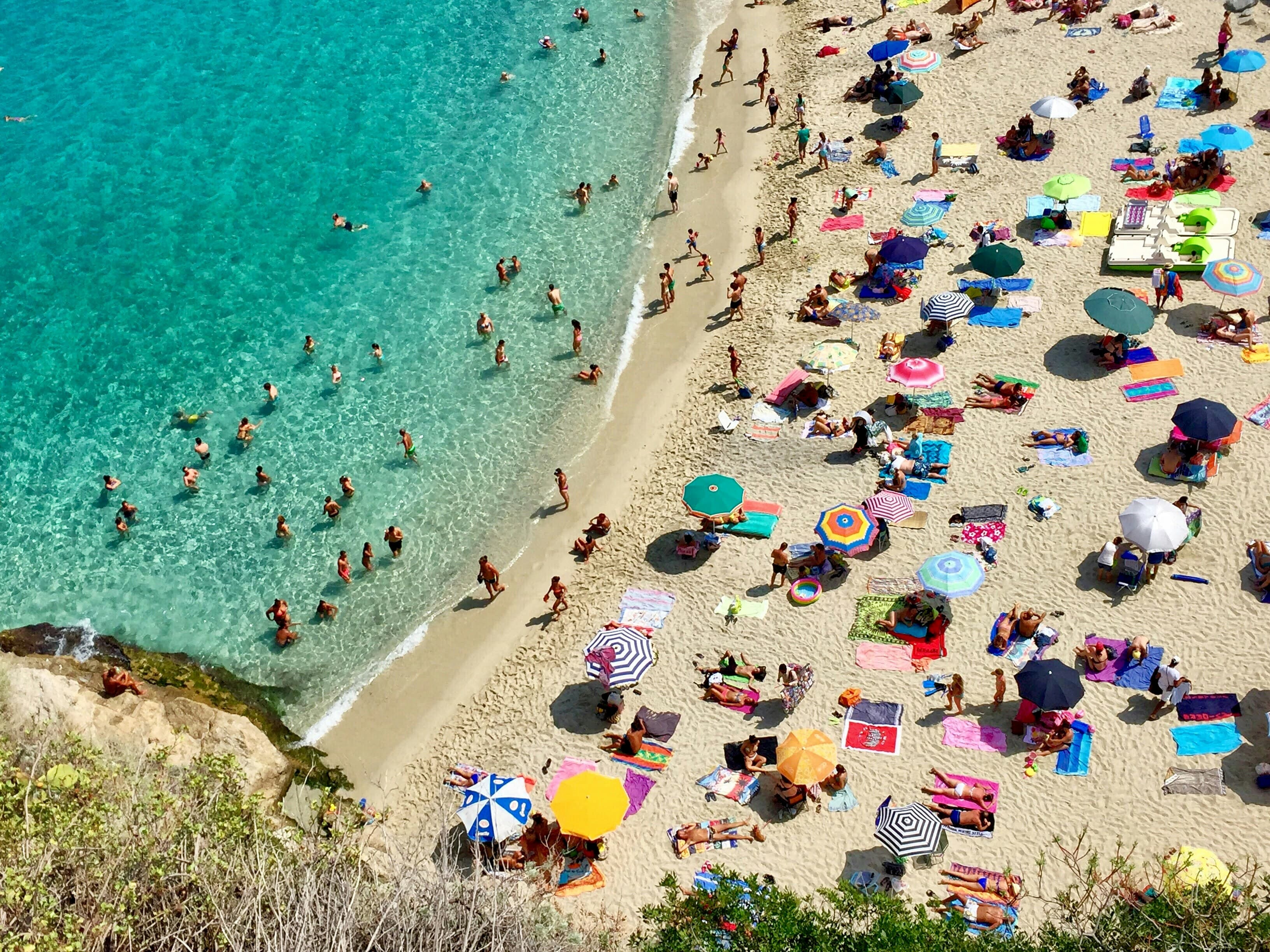
What you'll actually find in Calabria: empty beaches that look like the Caribbean, mountain air so clean it's been certified the purest in Europe, food that makes my Neapolitan heart jealous, and 2,500 years of history sitting in plain sight. It's the Italy that Italy forgot to market. That's exactly why you should go.
The Coast: Where the Real Italy Still Exists

The Costa degli Dei runs along the Tyrrhenian side, and Tropea is its main event. The town sits on a cliff above white sand beaches with water so blue it looks fake. Spiaggia della Rotonda is the main beach—arrive before 9 AM in summer or you'll be staking out towel territory. The views of Santa Maria dell'Isola, a medieval sanctuary perched on a rock, are worth the early alarm.
Walk the centro storico in the evening. Corso Vittorio Emanuele leads to a lookout where you can see the Aeolian Islands on clear days. The passeggiata here is real—families, gelato, kids running around. For dinner, La Lamia does excellent fileja alla Tropeana (the local pasta with eggplant, zucchini, and those famous sweet onions). Incipit is another solid choice with stone walls and proper Calabrian dishes.
Thirty minutes south, Scilla is something else entirely. The town has two personalities: Marina Grande with its long beach, and Chianalea, a fishing village so picturesque it gets called "Little Venice," though it's nothing like Venice. Chianalea is narrow alleys and pastel houses built directly over the sea. Fishermen park their boats under their windows. Restaurants sit on wooden platforms floating on the water.
This is swordfish territory. Between May and September, local boats hunt swordfish using traditional methods—tall watchtowers and handheld harpoons. Order it grilled, in pasta, or as a panino. Civico 5 claims to have invented the swordfish sandwich. The line in summer tells you it's legit. For a proper sit-down meal over the water, Ristorante Glauco serves fresh catches with sunset views of Sicily across the strait.
Don't skip Pizzo, a clifftop town famous for tartufo—a ball of hazelnut and chocolate gelato with a molten center, invented here in 1952. Get it at Bar Gelateria Ercole on Piazza Repubblica. Eat it immediately.
The Mountains: Europe's Cleanest Air

Most visitors stick to the coast. Mistake. The Sila National Park covers 74,000 hectares of mountain plateau in the center of Calabria—dense forests, alpine lakes, and air that biologists have certified as the cleanest in Europe. It feels more like Switzerland than southern Italy.
Camigliatello Silano is the main gateway town. From here, you can hike to the Giganti della Sila (Giants of Sila), a reserve of ancient pines some over 500 years old and 45 meters tall. The Cupone Visitor Centre has an accessible botanical garden and easy trails if you want a shorter walk.
In winter, Lorica has 24 kilometers of ski slopes. In summer, take the historic Treno della Sila—a restored 1900s locomotive that runs through the mountains on Sundays. Book ahead on the Ferrovie della Calabria website.
The Sila food is mountain cuisine: caciocavallo Silano cheese (aged in caves since Roman times), porcini mushrooms, Sila potatoes, and sausages dried with local peperoncino. Find a trattoria in San Giovanni in Fiore or Lorica and order whatever they're making that day.
The Food: Spicy, Honest, Unforgettable

Calabrian food is simple, aggressive, and perfect. The peperoncino runs through everything—this region eats more chili than anywhere else in Italy. If you can't handle heat, you'll need to ask them to go easy.
'Nduja comes from Spilinga, a small town in the mountains above Tropea. It's a spreadable pork sausage made with 30% peperoncino, and it's become famous worldwide in the last decade. Here, they spread it on bread, melt it into pasta sauces, and put it on pizza. Visit in August for the Sagra della 'Nduja festival. Any salumeria in town sells the real stuff to bring home.
Cipolla rossa di Tropea—the sweet red onion with protected status—shows up in everything from frittata to onion jam served with cheese. The mild coastal climate makes them sweeter than any onion you've had.
Fileja is the local pasta: eggless, hand-rolled around a thin stick to create hollow tubes that hold sauce. Order fileja con 'nduja (spicy) or fileja alla Tropeana (vegetable).
Swordfish dominates the coast. In Scilla and Bagnara Calabra, you'll find it grilled, rolled and stuffed (involtini), or cooked alla ghiotta with tomatoes, olives, capers, and Tropea onions.
For the Peperoncino Festival, head to Diamante in September. The seaside town hosts a week of tastings, cooking demonstrations, and yes, chili-eating contests.
Cirò DOC is the regional red wine—one of Italy's oldest denominations. It's made from Gaglioppo grapes and pairs perfectly with all the spicy, meaty food.
The History: 2,500 Years of Greeks and Warriors
Calabria was once Magna Graecia—"Greater Greece." From the 8th century BC, Greek colonists built cities along this coast that rivaled anything back home. Kroton (modern Crotone) was famous for its athletes; Pythagoras founded his philosophical school here. Reggio Calabria was a major port connecting Greece to the Italian mainland.
The Museo Nazionale della Magna Grecia in Reggio Calabria holds the evidence. The star attraction: the Riace Bronzes. These two life-size Greek warrior statues, cast around 460 BC, were pulled from the sea in 1972 by a snorkeler. They're among the only large-scale Greek bronzes to survive antiquity—most were melted down centuries ago. Standing nearly two meters tall, with silver teeth, copper lips, and inlaid glass eyes, they're mesmerizing.
The museum displays them in a climate-controlled room on an anti-seismic platform. Before entering, you pass through a chamber that removes dust and pollutants from your clothes. These statues are that important.
Beyond the bronzes, explore the Greek Walls along the Falcomatà waterfront, or take a day trip to the Archaeological Park of Locri Epizefiri, one of Magna Graecia's major city-states.
Getting There and Getting Around
Fly into Lamezia Terme, the main airport, with connections from Rome and Milan. Reggio Calabria also has an airport, useful for the southern coast.
You need a car for inland Calabria—the Sila, smaller villages, and flexible coastal exploration. Trains run along the coast and connect Tropea, Pizzo, Scilla, and Reggio Calabria on the Tyrrhenian side. From Tropea, the train to Scilla takes about an hour.
Best months: May, June, September, October. July and August bring Italian vacationers and higher prices, though it's never as crowded as the Amalfi Coast. Winter in the Sila is for skiing and mountain food.
One final note: English isn't widely spoken outside major tourist spots. Learn a few phrases—buongiorno, grazie mille, il conto per favore—and you'll get smiles and better service. The Calabresi are genuinely warm. They're just not used to tourists yet.
That won't last forever. Go now.
