.png&w=3840&q=75)
I spend my days in Venice. I love this city—its light, its silence in the early morning, the way the water reflects centuries of history. But I also watch 30 million tourists a year funnel through the same five streets, stand in the same three-hour lines, and leave without ever seeing what makes the Veneto genuinely remarkable.
So I started offering tours outside Venice. Not because the city isn't worth your time—it absolutely is—but because this region has so much more. An hour in any direction and you'll find Renaissance frescoes with no crowds, fish markets where you're the only foreigner, and hilltop towns that look exactly how you imagined Italy before you got here. This is where I send people when they ask what I'd actually do with a day.
The Easy Ones: Day Trips Everyone Should Consider
These destinations appear in every guidebook because they genuinely deliver. The difference is knowing when to go and what to prioritize.
Padua

Twenty-five minutes by train from Venice Santa Lucia. €5–10 each way. Padua has the Giotto frescoes in the Scrovegni Chapel—arguably the most important paintings of the early Renaissance, and you can actually see them without fighting through crowds. Book tickets online in advance; entry is timed and limited to 25 people for 15 minutes. The chapel's climate control requires it.
Beyond Giotto, the Basilica di Sant'Antonio is one of Italy's great pilgrimage churches, and the produce market under the Palazzo della Ragione is the real deal—vendors who've been there for decades, seasonal produce you won't find in tourist zones. The market runs mornings, closed Sundays.
Padua is a university city. Go on a weekday during term time and you'll feel its energy—students on bikes, aperitivo crowds filling the piazzas, actual life happening. It works as a half-day trip, but a full day lets you breathe.
Treviso

Thirty minutes by train. Treviso is what Venice would be if it had stayed small and nobody discovered it. Canals wind through the medieval center, frescoed facades line the streets, and the whole place feels genuinely lived in. Ryanair flies here, and most people treat it as a transfer point to Venice. Their loss.
Treviso claims to be the birthplace of tiramisu. Order it at Le Beccherie, where it allegedly originated. The town is also Prosecco territory—every bar pours the local stuff for a few euros. Try Dassie Vero Gelato Artigiano for gelato that experiments with flavors you won't find elsewhere, including gin-based options.
The fish market at Pescheria sits on its own little island in the canal. Morning is best. Walk the walls afterward—they're intact and give you views of the old town that most visitors miss entirely.
Verona

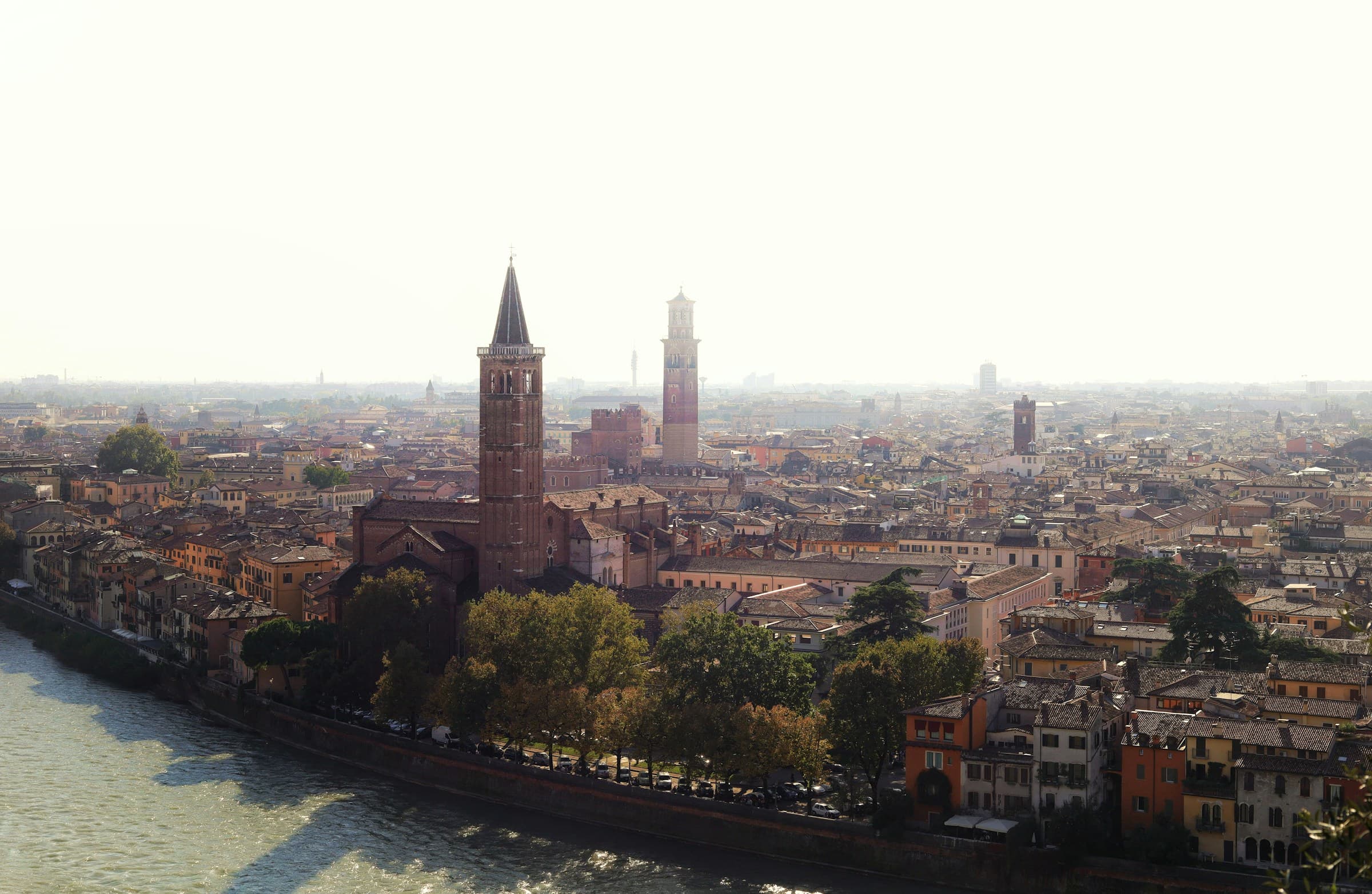
Ninety minutes by train, but worth every minute. Most people come for the Romeo and Juliet connection, which is entirely invented—Juliet's balcony was added by a hotel owner in the 1930s. Skip it. What's real: the Roman Arena, older and better preserved than the Colosseum, which still hosts opera in summer. The medieval streets around Piazza delle Erbe. The Adige River walk at sunset.
Book Arena tickets in advance for opera season (June–September). Outside summer, you can often walk in same-day. The Castelvecchio museum has world-class medieval art in a genuinely beautiful fortress setting.
Vicenza

Forty-five minutes by train. Andrea Palladio essentially invented modern Western architecture here. His buildings influenced everything from Thomas Jefferson's Monticello to government buildings across Europe. The Teatro Olimpico, his final work, is stunning—the oldest surviving covered theater in Europe, with forced-perspective stage sets that trick your eye even when you know the illusion.
Vicenza is still a working Italian city, not a museum. The centro storico is elegant but functional. Good restaurants, fewer tourists than any comparable town in the region. If you care about architecture at all, give it a full day.
The Ones Nobody Talks About
These are the places I actually send friends when they visit. Harder to reach, vastly more rewarding.
Chioggia

At the southern end of the Venetian lagoon, Chioggia is what Venice looked like before tourism took over. Colorful buildings line canals, fishing boats dock under residents' windows, and the fish market—one of Italy's largest—operates every morning like it has for centuries.
The New York Times named Chioggia a top travel destination in 2022. It hasn't changed much since. The main street, Corso del Popolo, hosts a sprawling Thursday market. The Pescheria fish market opens mornings except Monday—get there early for the real action. For seafood, El Gato is the only Michelin-recommended spot in town, serving local specialties like sardines in saor and seafood risotto.
Getting there: Bus from Venice Piazzale Roma takes about an hour. Or take the vaporetto from Lido for a scenic but longer route through the lagoon. Chioggia has actual beaches at nearby Sottomarina—real sand, real swimming, no tourist markup.
The passeggiata happens around 5–7 PM. Join it. This is how Italians live.
Asolo

Called the "City of a Hundred Horizons" for good reason. This hilltop town in the Prosecco hills has been attracting artists and writers for centuries—Robert Browning wrote his final work here, the explorer Freya Stark made it her home, and Eleonora Duse is buried in the local cemetery.
Asolo is small. You can walk the entire centro storico in an hour. But the point isn't coverage—it's stopping in Piazza Garibaldi for coffee, climbing to the Rocca fortress for views of the Dolomites, wandering into the cathedral to see the Lorenzo Lotto altarpiece. The Museo Civico in Piazza Garibaldi has exhibits on the town's famous residents.
For food, Osteria Al Bacaro serves traditional Veneto dishes at reasonable prices. Due Mori has panoramic views and creative takes on local cuisine. Stay overnight at Albergo al Sole if you can—waking up here before the day-trippers arrive is the best way to experience it.
Asolo requires a car or careful planning. Bus from Bassano del Grappa connects, but service is limited. It's easiest combined with a Prosecco hills drive.
Cittadella

A perfectly preserved medieval walled town, with 13th-century walls you can actually walk on top of. The Camminamento di Ronda—the wall walk—gives you a complete circuit of the town from above, looking down into gardens and courtyards.
One hour by direct train from Venice Santa Lucia. Cittadella makes an easy half-day trip, though it pairs well with Padua or Bassano del Grappa. The Duomo has frescoes worth seeing, and the centro storico has none of the tourist infrastructure that clutters more famous towns. You'll eat where locals eat because there's nothing else.
Bassano del Grappa

The covered wooden bridge—Ponte degli Alpini, designed by Palladio in 1569—is Bassano's signature. The town sits at the foot of Monte Grappa, surrounded by grappa distilleries (the spirit is named for the mountain, not the town, but they've merged in popular imagination).
Visit Poli Museo della Grappa for context on how the stuff is made. Walk the centro storico's porticoed streets. The ceramic tradition here goes back centuries—the Museo Civico in Palazzo Sturm shows the history.
Seventy-five minutes by train from Venice. Bassano works as a day trip or as a base for exploring the Prosecco hills and Monte Grappa.
The Prosecco Hills

Between Conegliano and Valdobbiadene, the Prosecco hills became a UNESCO World Heritage Site in 2019. The landscape is genuinely stunning—steep vineyards on terraced slopes, medieval villages, family wineries that have been operating for generations.
The Strada del Prosecco is Italy's oldest wine route, 50 kilometers winding through the hills. You need a car, or join a tour. Most wineries welcome drop-ins for tastings, though calling ahead is polite. Prices are reasonable—you're buying directly from producers, not paying tourist markup.
Key stops: Valdobbiadene is the heart of Prosecco Superiore DOCG production. Conegliano has Italy's oldest oenological school and a castle with panoramic views. Follina is one of Italy's most beautiful villages, with a Cistercian abbey worth the detour. Cison di Valmarino has CastelBrando, a medieval castle turned luxury hotel.
For serious wine tourism, book ahead at a few wineries rather than rushing through many. The conversations are better, the tastings more generous, and you'll actually remember what you drank.
Practical Information
Trains: Trenitalia regional trains are cheap and frequent. Buy tickets in advance online or at machines in the station. Validate paper tickets before boarding.
Best timing: Avoid August when Italians vacation and everything gets crowded. September and October are ideal—harvest season in the wine country, good weather, reasonable prices. May and June work well for the hill towns before summer heat.
Venice day-trip logic: If you're staying in Venice and doing day trips, start early. Trains from Santa Lucia run frequently. You'll beat the crowds to your destination and return to Venice in the evening when the day-trippers have left.
Where to base: Consider staying outside Venice entirely. Treviso, Padua, or Verona all work as bases with better value accommodation. You can train into Venice for a day, see it properly, and return to somewhere with actual neighborhood life.
The Veneto is bigger than San Marco. Give it the time it deserves.