When I tell people in Florence that I'm heading to Marche for the weekend, they usually look puzzled. Most travelers don't know the region exists, let alone that it shares a border with Tuscany. That's precisely why I keep going back. Marche has rolling hills, Renaissance masterpieces, a dramatic coastline, and food that rivals anything in my home region. What it doesn't have is crowds.
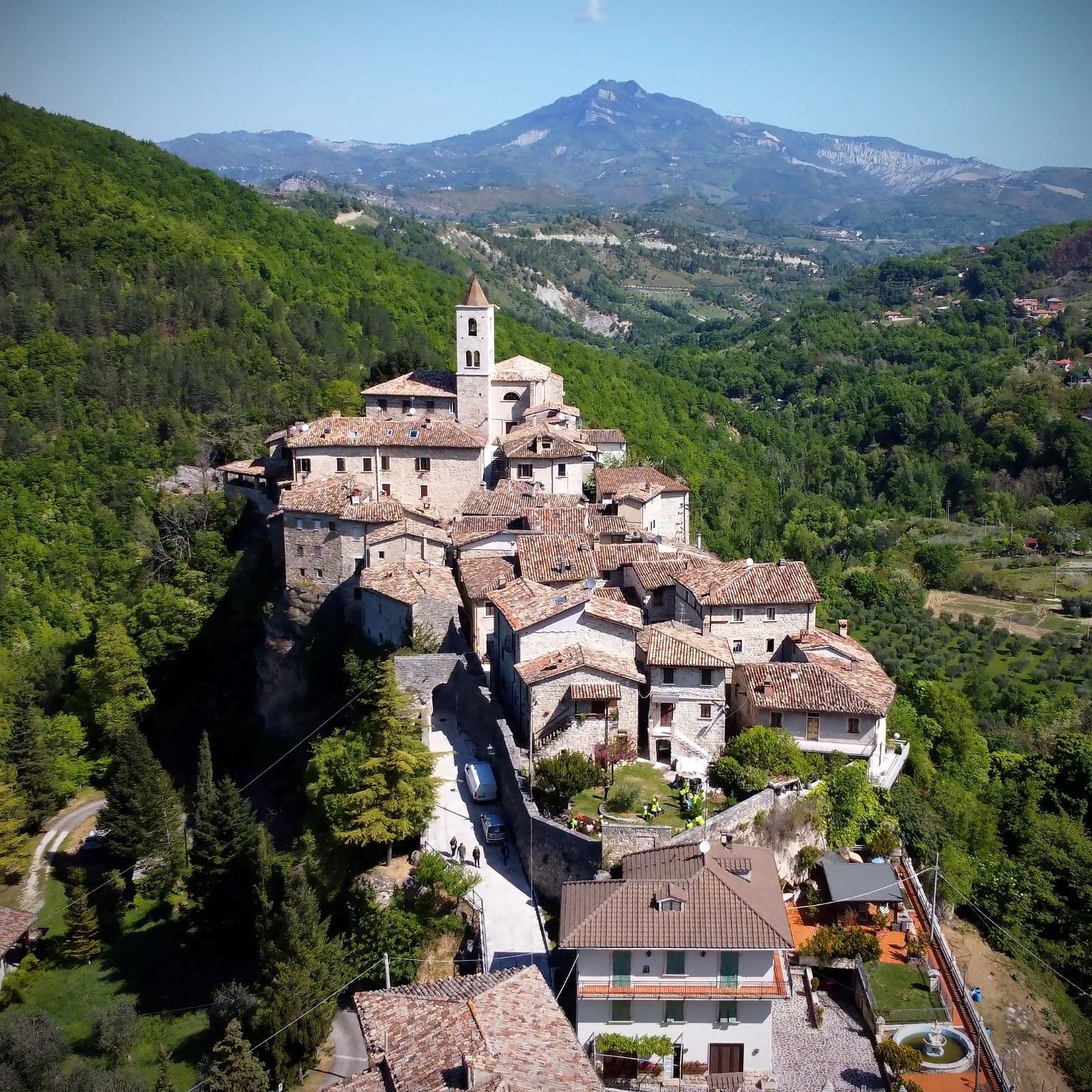
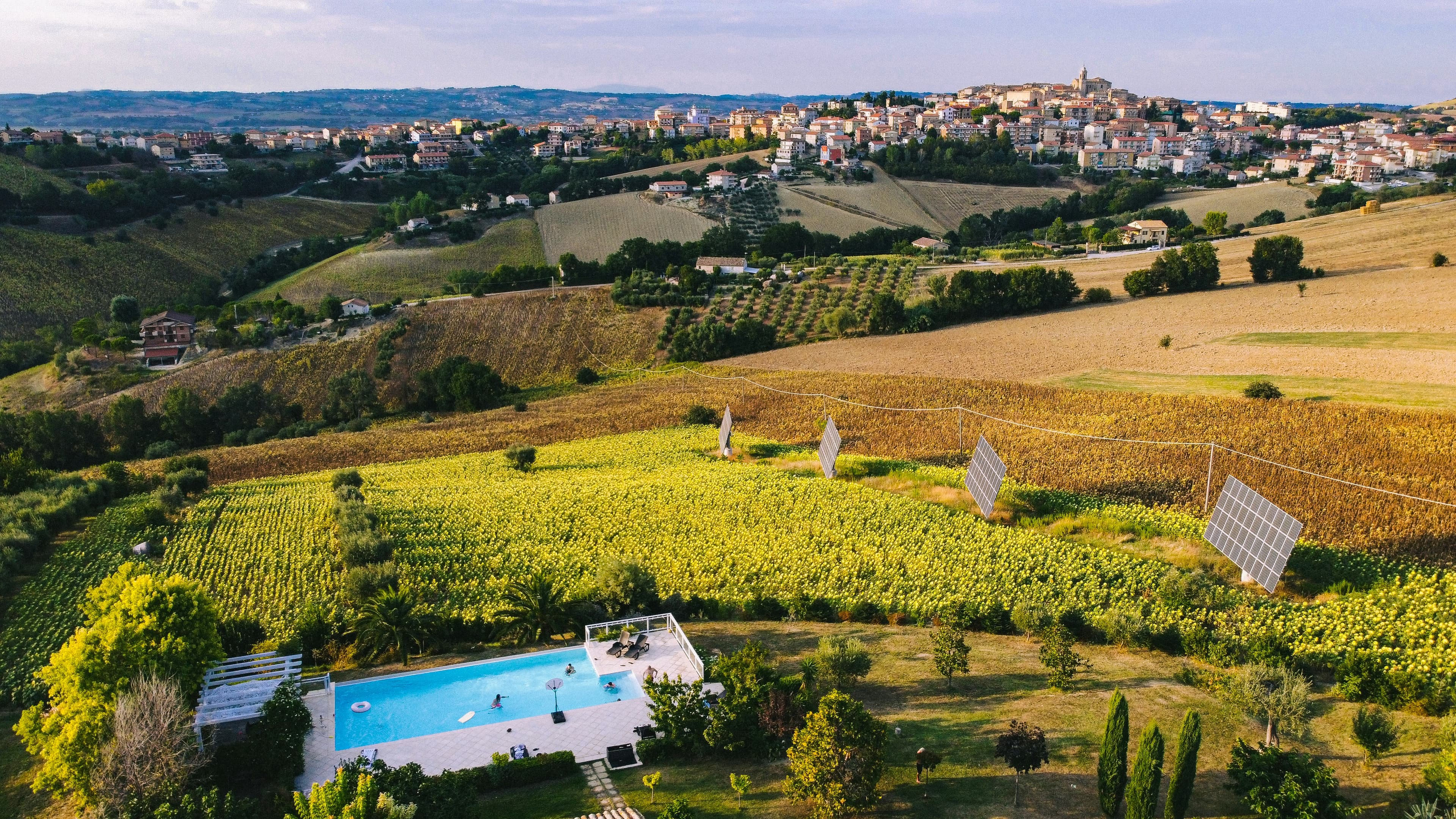
The comparison to Tuscany is inevitable, but it undersells what Marche actually offers. This is a region with its own identity: more rustic, less polished, and refreshingly unaware that it could be a tourist destination. The interior looks like Tuscany did 40 years ago, before tour buses and wine-tasting packages. The coast rivals the Cinque Terre for beauty, without the Instagram queues. And there's Urbino, a Renaissance city that matches Florence for artistic importance but not for visitor numbers.
Urbino: Where Raphael Was Born
.jpg)
If you study Renaissance art, you eventually make the pilgrimage to Urbino. The city was a major intellectual center in the 15th century under Duke Federico da Montefeltro, a mercenary captain turned patron of the arts. His Palazzo Ducale dominates the town, its twin turrets visible from kilometers away. Today it houses the Galleria Nazionale delle Marche, one of Italy's most important Renaissance collections.
The palace itself is the real masterpiece. Federico hired the best architects of the era: Luciano Laurana designed the fairy-tale façade, and Francesco di Giorgio Martini worked on the interior. Walk through the 60 rooms and look up at the ceilings, the carved doorways, the intarsia woodwork. The Studiolo del Duca, recently restored and reopened in May 2025, is a tiny room covered floor to ceiling in trompe-l'oeil wood inlay depicting musical instruments, books, and scientific tools. It's the most famous example of this craft in existence.
The art collection includes Piero della Francesca's "Flagellazione di Cristo" and the mysterious "Ideal City," as well as Raphael's "La Muta." Speaking of Raphael: he was born here in 1483. His Casa Natale on Via Raffaello is now a small museum containing works by his father Giovanni Santi, and possibly a fresco completed by Raphael himself at age eight.
The Palazzo Ducale is open Tuesday through Sunday, 8:30 AM to 7:15 PM. Tickets cost €12. In summer 2025, special Monday afternoon openings run from 3 PM to 7 PM in June through September. Book through CoopCulture if visiting in high season.
Beyond the palace, Urbino rewards wandering. The medieval quarter is a warren of intact Gothic architecture. The Oratorio di San Giovanni Battista contains floor-to-ceiling frescoes by the Salimbeni brothers, completed between 1416 and 1418. The colors glow because of a recent cleaning, not restoration. The detail is astonishing.
Getting there requires some planning. Urbino sits on a hill with no direct train service. Take a train to Pesaro on the coast, then bus CS or 46 to Urbino. By car, exit the A14 at Pesaro-Urbino and follow the SP423. The drive from Florence takes about two and a half hours.
The Conero Coast: Cliffs and Hidden Coves

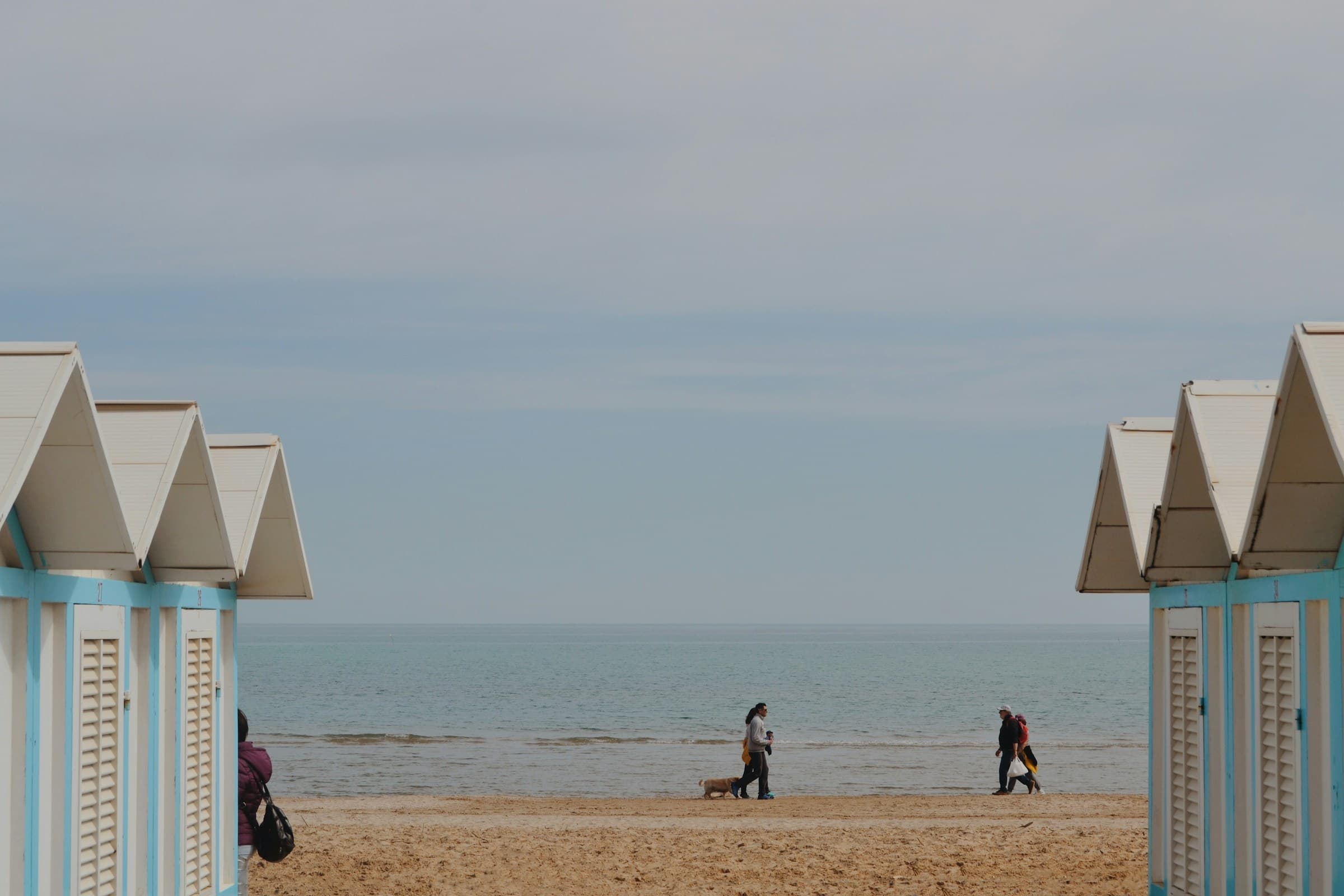
South of Ancona, Monte Conero rises 572 meters directly from the Adriatic. The mountain and surrounding regional park protect one of Italy's most beautiful stretches of coastline: white limestone cliffs, turquoise water, and beaches accessible only by boat or hiking trail.
The main resort towns are Portonovo, Sirolo, and Numana. Each has its own character. Portonovo sits in a bay at the foot of the mountain, with several beach clubs that transform into fish restaurants at night. The Church of Santa Maria di Portonovo, an 11th-century Romanesque structure, stands near the shore. Try the moscioli, wild mussels harvested only here and protected as a Slow Food presidium.
Sirolo is the most picturesque town, a medieval village perched above the sea with views along the entire coast. The main beaches, Urbani and San Michele, are easily reached from the center on foot or by shuttle bus.
The star is Spiaggia delle Due Sorelle, named for twin white rock stacks that rise from the water. It's the symbol of Marche's coast and regularly appears on lists of Italy's most beautiful beaches. The catch: it's only accessible by sea. Ferries run from the port of Numana starting at 8:30 AM, with returns until 3:30 PM. Book through Traghettatori del Conero in advance during summer. Alternatively, rent a kayak or SUP from Portonovo and paddle the hour-long route yourself. Expect to pay €80 to €100 for a kayak rental.
For a more accessible beach day, Mezzavalle offers a long stretch of white pebbles and sand between Portonovo and Sirolo. It requires a 20-minute walk down a steep path but remains quieter than the resort beaches. A bar and restaurant operate at beach level.
The Conero also produces wine worth seeking out. Rosso Conero DOC is made from at least 85% Montepulciano grapes grown on the slopes of the mountain. It's full-bodied with cherry and earth notes. Moroder Winery, a 200-year-old family estate, makes some of the best. The Strada del Vino Rosso Conero connects the area's producers.
Ascoli Piceno: Italy's Most Beautiful Piazza

In the southern part of Marche, near the border with Abruzzo, Ascoli Piceno is a city built entirely of travertine. The pale stone gives everything a unified, elegant appearance. The historic center is remarkably intact, with medieval towers, Renaissance palaces, and one of Italy's finest squares.
Piazza del Popolo deserves its reputation as one of the most beautiful piazzas in Italy. Locals call it "il salotto d'Italia," the living room of Italy. The rectangular space is lined with arcaded buildings, including the Gothic Church of San Francesco and the Palazzo dei Capitani del Popolo. In the evenings, the entire town comes here for the passeggiata.
Ascoli is famous for one thing above all others: olive ascolane. These are large, mild Ascolana Tenera olives stuffed with a mixture of ground meat cooked with wine and lemon zest, then breaded and deep-fried. They're addictive. Served in paper cones alongside cremini, fried custard that arrives warm, they form the foundation of the fritto misto all'ascolana.
The place to try them is Migliori Olive Ascolane on Piazza Arringo, a shop that's won awards for its olives and serves them fresh throughout the day. For a full aperitivo experience, Caffè Meletti on Piazza del Popolo has operated since 1907, hosting everyone from Hemingway to Italian aristocracy. Order an Anisetta Meletti, the local anise liqueur produced since 1870, and a plate of fritto misto.
For dinner, La Nicchia, housed in a former synagogue near Piazza del Popolo, has earned Gambero Rosso recognition for its pizzas and seasonal dishes. Siamo Fritti, steps from the main square, is a wine bar specializing in local wines paired with olive ascolane and homemade potato chips.
Ascoli Piceno has a train station on the San Benedetto del Tronto line, connecting to the main Adriatic coast route. From Florence, change at Bologna or Ancona. The journey takes about three and a half hours.
Beyond the Main Towns

Marche rewards those who drive between destinations rather than rushing. A few places worth adding:
Frasassi Caves near Genga are among Italy's most visited caves, with over 13 kilometers of underground passages. The main chamber, the Abisso Ancona, is enormous. Guided tours run throughout the day.
Gradara Castle, in the province of Pesaro-Urbino, is a 14th-century fortress associated with the story of Paolo and Francesca from Dante's Inferno. The castle is remarkably preserved and hosts summer reenactments.
Cingoli, called the "Balcony of Marche," offers panoramic views from its position high in the hills. It's a medieval village with no particular attractions except the view itself, which extends across the entire region.
Recanati is the birthplace of poet Giacomo Leopardi. His family palace and the hill that inspired "L'Infinito" draw Italian literary pilgrims, though few foreign visitors.
The Temple of Valadier at Genga is an octagonal chapel built into a cave in 1828. It made National Geographic's Best of the World 2025 list and is worth the detour if you're visiting the Frasassi Caves.
What to Eat and Drink
Marche cooking is straightforward and ingredient-driven. A few dishes to seek out:
Vincisgrassi is the local version of lasagna, with a béchamel and meat sauce layered between thin egg pasta. The recipe dates to 1784. Every restaurant makes it slightly differently.
Brodetto is a fish stew that varies from town to town along the coast. The versions in Ancona and Porto Recanati are both claimed as definitive.
Ciauscolo is a soft, spreadable salami from the interior, meant to be eaten on bread like pâté.
Prosciutto di Carpegna is a DOP ham from the mountains near Urbino, aged longer than Parma and with a more pronounced flavor.
For wines, Verdicchio dei Castelli di Jesi is the famous white, crisp with almond notes, excellent with seafood. Rosso Conero is the red to drink along the coast. In the south, Rosso Piceno pairs well with the heartier meat dishes.
Planning a Trip
Marche works best with a car. Trains connect the coastal towns, and buses serve Urbino from Pesaro, but the interior and smaller villages are impractical without your own wheels. The A14 motorway runs the length of the Adriatic coast. Ancona's Falconara Airport has limited connections, mostly domestic and seasonal. Most visitors fly into Bologna, Rome, or even Bari and drive.
A reasonable itinerary for a week: two nights in Urbino to see the art, two nights on the Conero coast for beaches and seafood, two nights in Ascoli Piceno for the food and atmosphere. Add stops in the hill towns as time allows.
The best months are May, June, September, and October. July and August bring Italian beach holidays, and the coast fills up. Winter is quiet but atmospheric, especially in Urbino and Ascoli, where you'll have the piazzas nearly to yourself.
Marche remains under the radar because it lacks a single famous attraction. There's no Colosseum, no David, no Amalfi Drive. What it has instead is everything that made those places special before they became famous: the art, the food, the coast, the villages, all without the crowds. Every time I return to Florence after a weekend in Marche, I'm struck by the contrast. It's what Italy used to feel like.