
Here's what most travel guides won't tell you: Rome wasn't designed with toddlers in mind. The cobblestones will rattle your stroller. The Metro doesn't reach everywhere because ancient ruins are buried underneath. And dinner doesn't start until 7 PM, which is approximately four hours past any reasonable child's patience threshold.
But Romans have been raising kids in this city for 2,700 years. We've figured out a few things. The neighborhood you choose matters enormously when you're traveling with small children. It determines whether you'll spend your days walking to sights or wrestling with unpredictable buses, whether there's a playground nearby when everyone needs to blow off steam, and whether your evening ends with a pleasant passeggiata or a meltdown on a crowded street.
I've raised two kids in Rome. Here's what I actually recommend.
The Neighborhoods That Work for Families
Monti: My Top Pick for Families with Young Kids

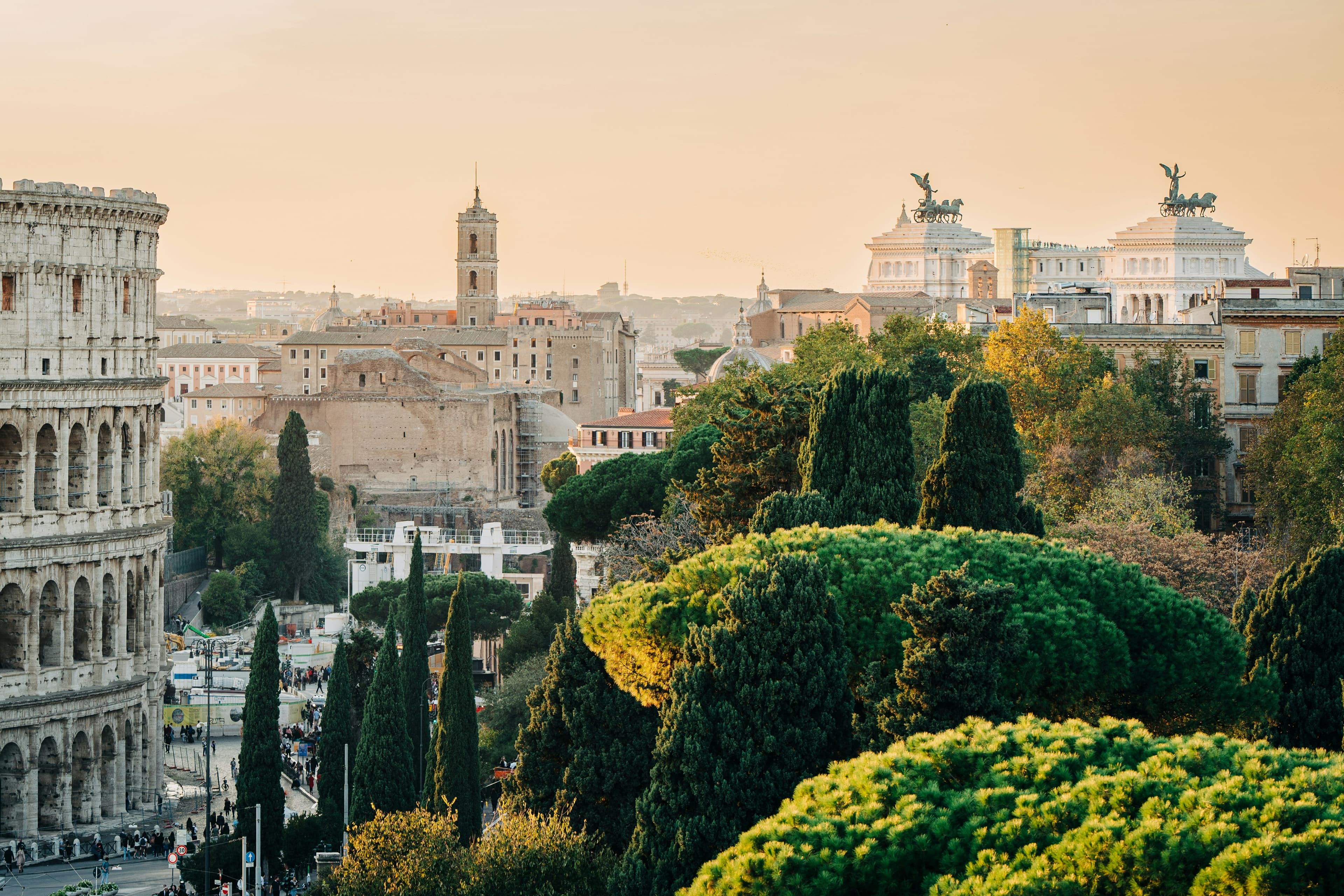
If I could choose one neighborhood for visiting families, it's Monti. This is Rome's oldest residential quarter, the rione beside the Colosseum that's kept its local character despite being smack in the center.
Why Monti works with kids: it has playgrounds. Real ones. The Parco del Colle Oppio sits just across from the Colosseum with swings, climbing frames, slides, and a kiosk selling coffee for exhausted parents. You can let the kids run while the Colosseum literally towers behind you. It's not fancy, and Romans will tell you it could use maintenance, but it does the job.
Monti has the services you need: small supermarkets, bakeries for breakfast (try Antico Forno ai Serpenti at Via dei Serpenti 122), and family-friendly pizzerias for dinner. It feels like a neighborhood where people actually live, because they do. You'll see Roman kids playing in Piazza della Madonna dei Monti in the evenings while their parents drink wine at Ai Tre Scalini.
The location is ideal. You're a 10-minute walk from the Colosseum and Roman Forum. The Pantheon and Trevi Fountain are about 20 minutes. Termini station, if you need trains, is close. And the slightly grittier feel (there's graffiti, yes) means accommodation costs less than the polished streets around Piazza Navona.
Stroller notes: Cobblestones exist but are manageable. The streets are narrow but mostly pedestrianized around the main square.
Centro Storico: Piazza Navona and the Pantheon Area

The classic tourist center, and for good reason. If you stay between Piazza Navona and the Pantheon, you can walk to almost everything. The Trevi Fountain is 10 minutes away. The Vatican is 25 minutes. Campo de' Fiori's market is around the corner.
For families, the pedestrianized piazzas are the real draw. Kids can run in Piazza Navona without you worrying about traffic. Piazza della Rotonda in front of the Pantheon is the same. The streets between them are a maze of narrow alleys, but they're charming rather than stressful.
The downside: crowds. Rome's center has become intensely busy, especially in peak season. Prices are higher. And there's very little green space, no parks or playgrounds within easy reach. For a short trip where you're sightseeing constantly, this works. For a longer stay with kids who need to burn energy, consider Monti or Prati instead.
Stroller notes: Piazza Navona and surrounding streets are reasonably smooth. Watch for delivery vehicles in the mornings.
Trastevere: Charming but Complicated
.jpg)
Everyone loves Trastevere: the ivy-covered walls, the terracotta buildings, the trattorias spilling onto cobblestone streets. And for good reason. This is atmospheric Rome at its best.
But with young kids? It's complicated.
Trastevere is across the river from the main sights. That's fine if you don't mind the walk (about 25 minutes to the Colosseum, 20 to the Pantheon), but with tired legs and a stroller, it adds up. Tram 8 helps since it runs down Viale di Trastevere to the center, but public transport with small children is its own adventure.
The neighborhood also comes alive at night. Really alive. Bars and restaurants fill with young Romans and tourists until late, which means noise if your accommodation faces a busy street. Ask about window glazing before booking.
That said, Trastevere has one ace: Piazza San Cosimato. There's a small playground here, shaded by trees, where local kids play while their parents relax on benches. It feels genuinely Roman. The morning market in the same piazza is worth a wander.
Good restaurants for families: Enzo al 29 for traditional Roman dishes, La Renella for pizza by the slice.
Stroller notes: The narrow alleys have cars coming and going despite their size. Stay alert.
Prati: For Vatican Access and Local Living
.jpg)
Prati is the neighborhood just north of Vatican City. Elegant, residential, and significantly less chaotic than the center. If the Vatican is high on your list or you want a more local feel without sacrificing convenience, this works well.
The streets are wider here, the buildings are newer (19th century rather than medieval), and there's excellent shopping along Via Cola di Rienzo. It feels more like a regular city neighborhood where Romans go about their lives.
For kids, there's a playground in the garden outside Castel Sant'Angelo. Convenient, since the castle itself is surprisingly good for children (spiral staircases, ramparts, old weapons, views from the terrace). You're a short walk to St. Peter's and the Vatican Museums.
The tradeoff: Prati is farther from the Colosseum and the ancient sites. You'll need buses, Metro, or taxis to reach them.
Stroller notes: This is one of Rome's more stroller-friendly areas. Wider sidewalks, fewer cobbles.
Celio: The Quiet Alternative
.jpg)
Celio sits on the opposite side of the Colosseum from Monti. It's a quiet, slightly residential hill with excellent parks nearby. Villa Celimontana is a proper green space where kids can run, and there's sometimes a man with ponies offering rides in a cart around the gardens.
The neighborhood is calmer than Monti, with fewer restaurants and shops, which suits some families and frustrates others. You're still within walking distance of the Colosseum and Forum. Just know it's a bit of a hike to Piazza Navona and the Pantheon, probably 30+ minutes with small legs.
What About Parks and Playgrounds?
Rome doesn't have a playground on every corner like northern European cities. But green spaces exist if you know where to look.
Villa Borghese is Rome's equivalent of Central Park. Rent a rowboat on the small lake, hire a four-seater surrey bike, let the kids loose on the playgrounds (one near the pond, another by Casina di Raffaello). The park is huge. You could spend an entire afternoon here. Access it from Piazza del Popolo, the Spanish Steps, or Via Veneto.
Near the playground entrance at Porta Pinciana, there's even a small bumper car track and carousel for young children. The park has a little electric train that circuits the grounds, useful when everyone's tired.
Explora Children's Museum is five minutes from Villa Borghese, near Piazza del Popolo. It's designed for ages 0–12, with hands-on exhibits about science, technology, and the environment. Sessions last 1 hour 45 minutes, which is enough time to see several stations. There's an outdoor playground with a zipline, plus Da Michele's pizza inside if you need lunch.
Colle Oppio beside the Colosseum is small but works in a pinch: swings, climbing frame, views of the amphitheater. The kiosk sells coffee and snacks.
For a real escape, Parco degli Acquedotti lies outside the center near Subaugusta Metro station. Ancient Roman aqueducts tower over wild grassland. It's vast, open, and feels nothing like tourist Rome. There's a playground near the entrance, and families bring picnics on weekends.
The Stroller Question
You've read that Rome is difficult with strollers. It's true and not true.
Yes, there are cobblestones. Yes, cars park on sidewalks. Yes, you'll occasionally need to fold the stroller and carry a child down steps into a Metro station. But Rome involves enormous amounts of walking, and a stroller is still the best way to keep a tired toddler moving.
Bring one with sturdy wheels (ideally suspension) and prepare to be flexible. The BabyZen YoYo is wildly popular among Roman parents for its compact fold and decent durability. Avoid flimsy umbrella strollers; they won't survive the streets.
Also bring a carrier. You'll want it for the Vatican Museums, St. Peter's dome climb, and anywhere the stroller becomes impractical.
Practical Notes for Families
Eating: Romans eat dinner late, 7 PM at the earliest, often 8 or 9. Restaurants are generally welcoming to children (Italians dote on kids), but most have basic wooden high chairs without straps. If your child is a climber, pack a travel high chair or be prepared to hold them.
For earlier meals, aperitivo hour (usually 6–8 PM) is your friend. Many bars serve free snacks with drinks, which can tide hungry children over until dinner opens.
Gelato is a legitimate food group here. Use it strategically as bribery for good behavior at museums.
Transport: Walking is usually easier than buses. Taxis are excellent with fixed-rate fares within the historic center, but car seats aren't provided or legally required. Bring your own if that matters to you. The hop-on hop-off buses work well with kids; the open top is entertaining, and you can disembark at playgrounds when patience runs out.
Booking ahead: Reserve Colosseum tickets weeks in advance. The Vatican too. Free first Sundays at museums are wonderful in theory but mobbed in practice. Skip them with young children.
The Bottom Line
For families with young kids, I'd rank the neighborhoods this way:
- Monti – Best overall balance of location, playgrounds, and local character
- Prati – Best for Vatican access and stroller-friendly streets
- Centro Storico – Best for walkability to sights, hardest on kids who need green space
- Celio – Best for quiet and parks, requires more walking to main attractions
- Trastevere – Best atmosphere, but logistics are trickier with small children
Rome isn't built for convenience. But it's built for life, and that includes the chaos, joy, and occasional gelato-covered meltdown of traveling with children. Stay somewhere that gives you options, pack your patience, and remember that the Colosseum has survived for 2,000 years. It'll survive your toddler.
.jpg)