
Brisighella rises a few kilometers from Faenza and the first folds of the Tuscan-Romagnolo Apennines. Located in the lower valley of the Lamone river, this locality appears as a small amphitheater of houses at the foot of three gypsum hills.
Everything seems to lead back to one of those places where time seems to slow down and almost stop. Recognized among the most beautiful villages in Italy, awarded the Orange Flag by the Touring Club Italiano and part of the Città Slow movement, the town has made slowness, hospitality and authentic flavors its distinctive feature.
Brisighella is one of those places that lend themselves to being discovered slowly, step by step, letting the details guide your gaze: the sound of footsteps on the cobblestones, the clear profile of the gypsum emerging between the houses, the smell of new oil coming out of the shops. Here, hospitality still has a human face: small family-run establishments, trattorias that preserve generations-old recipes, and artisans who gladly talk about their work, contributing to giving the village an authentic character, far from the most crowded destinations.
10 unmissable things to do in Brisighella

1. Climb to the Rocca Manfrediana
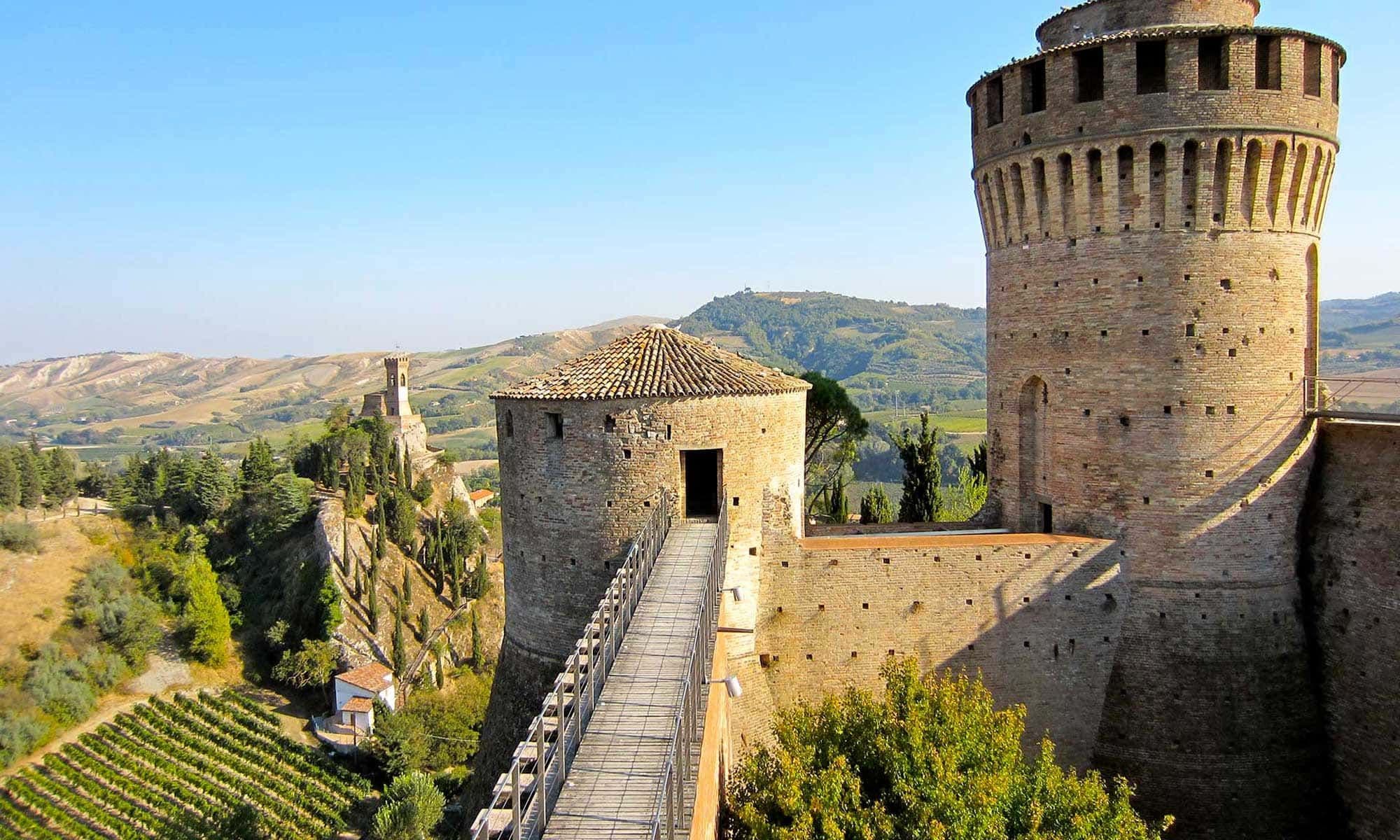
The climb to the Rocca Manfrediana is the best way to get your bearings and immediately have an overview of Brisighella. The path, through stone alleys and stretches of trail on the gypsum hill, is short but scenic, and allows you to perceive how much the village is nestled in the Apennine landscape. Once at the top, the fifteenth-century fortress, with its walls, towers, and patrol walkways, tells the defensive past of the Lamone valley, while from the openings, a wide view opens up over the rooftops, olive groves, and the gypsum ridge that runs towards the horizon. It is the ideal place for those who love photography, but also for those who simply want to sit for a moment and understand the deep connection between the town and its hills.
2. Walk along the Via degli Asini
Crossing the Via del Borgo, or Via degli Asini, means entering the most recognizable and narrative heart of Brisighella. This elevated covered walkway, with its arched windows of irregular shapes and sizes, directly overlooks the street below and offers an unusual perspective on the village. Once, mules and birocciai carts, which transported goods along the valley, found shelter here: imagining that coming and going of animals, voices, and wooden wheels makes the experience almost theatrical. Today, the street is a suspended corridor between past and present, perfect for those who love to capture architectural details, plays of light and shadow, and small traces of daily life from a bygone era.
3. Reach the Clock Tower at sunset
The climb to the Clock Tower is a small ritual, especially if you choose sunset. The path winds through stairs, stretches of trail, and glimpses that, at every turn, open new views of the rooftops and hills. Once at the top, the tower, built in the nineteenth century on an ancient fourteenth-century structure, stands out sharply against the sky, while below, the profile of the village aligns. When the light softens, the white of the gypsum, the green of the olive trees, and the warm-colored houses light up, creating an atmosphere that invites contemplation and photography. It is one of the places where the intertwining of history, nature, and contemporary daily life is most clearly perceived.
4. Visit the Sanctuary of Monticino
On the third hill, the Sanctuary of Monticino adds a spiritual dimension to the landscape of Brisighella. The eighteenth-century church, overlooking a wide natural balcony, can be reached with a gentle walk that invites you to slow down and look up. Inside, the atmosphere is intimate, marked by popular devotions that tell the story of the community's relationship with this place of protection. Outside, the square and panoramic points allow you to embrace the valley, the Vena del Gesso, and the Apennine reliefs with your gaze, making the sanctuary a perfect stopping point for those seeking silence, meditation, or simply a place to breathe deeply and look far.
5. Explore the historic center on foot
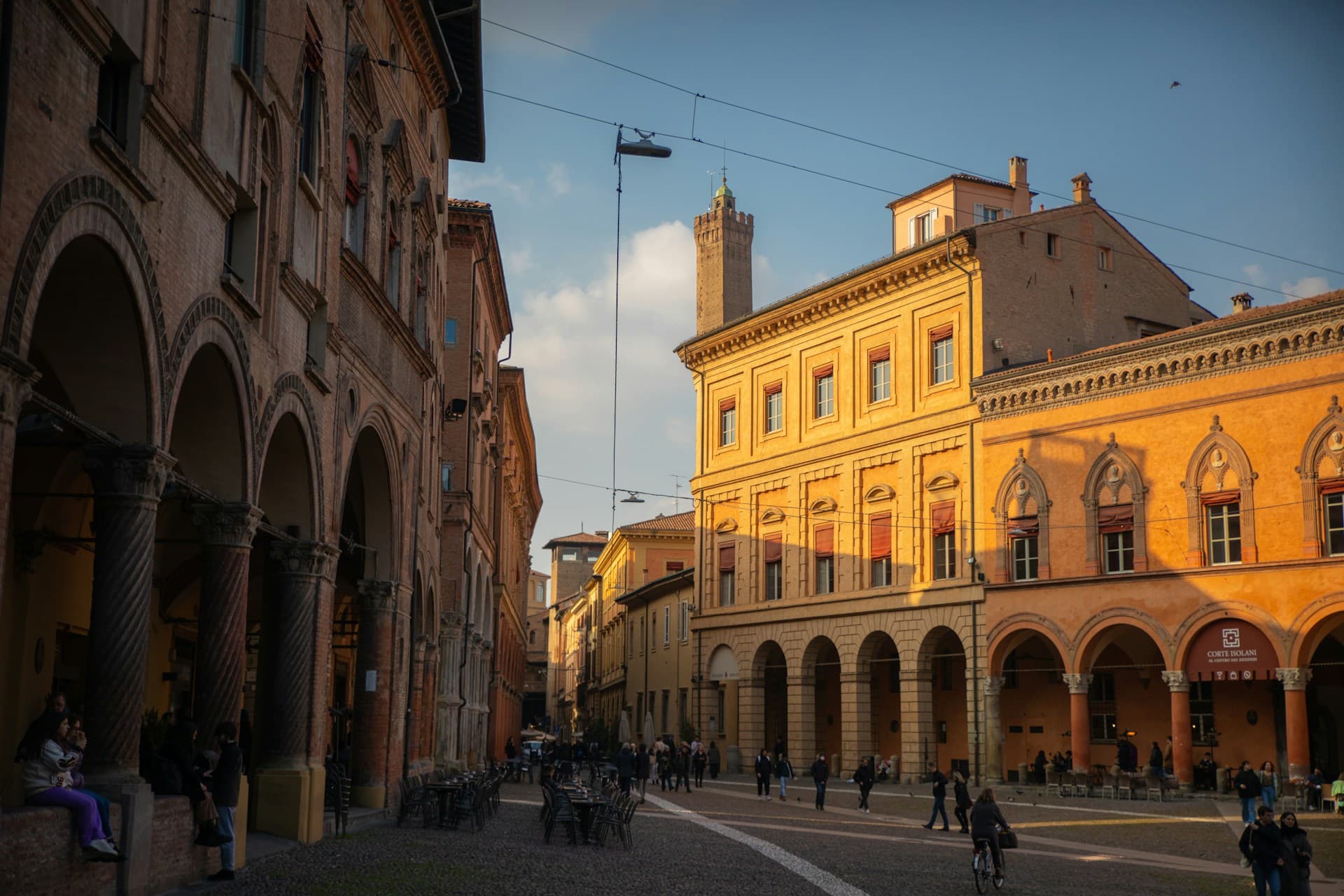
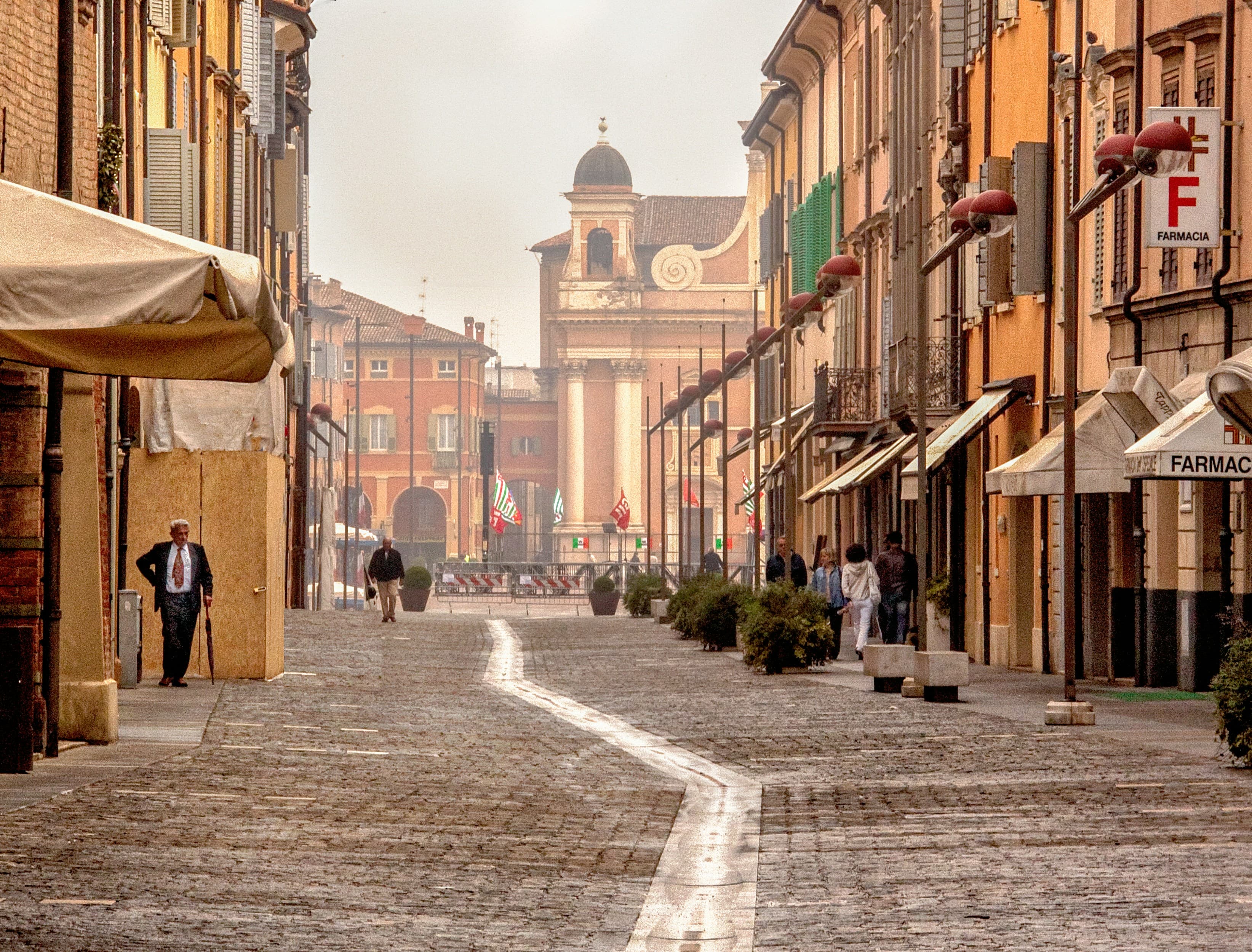
The historic center of Brisighella is a dense fabric of details, best revealed by walking unhurriedly, letting the intersections, fountains, and smells guide the way. The cobbled alleys, pastel-colored houses, small squares with benches, and artisan shops create an intimate urban landscape, where you feel more like guests than tourists. As you stroll, you encounter ancient "funtane" (fountains), glimpses of gypsum walls, signs of taverns and shops selling typical products, each with its own story. Stopping for a coffee, entering a shop, or exchanging a few words with residents allows you to grasp that sense of community that is an integral part of the village's charm.
6. Enter the Pieve del Thò
Just outside the center, the Pieve di San Giovanni in Ottavo, better known as Pieve del Thò, offers one of the most intense experiences for those who love art and spirituality. Immersed in a rural landscape of fields and rows, the three-nave Romanesque basilica strikes with its essentiality: columns, capitals, stones, and harmonious proportions dialogue with the light entering through the small openings. Entering it means entering a time spanning centuries, made of pilgrimages, masses, silences, and prayers that have stratified in space. It is a place that invites you to slow down, sit for a few minutes, and observe how architecture and the external landscape respond to each other.
7. Go trekking in the Vena del Gesso
For those who love walking, the Vena del Gesso is a small paradise within reach. From the Cà Carnè Visitor Center, trails of varying duration and difficulty depart, crossing woods, gypsum outcrops, and panoramic points from which the landscape appears almost lunar. As you walk, shady stretches, clearings, and sudden glimpses of the village and valley alternate, with a variety of environments that makes each outing different. The organized activities – from guided walks to night excursions, with overnight stays in a refuge – allow you to delve into naturalistic and geological aspects, transforming simple trekking into an opportunity to learn about the territory.
8. Experience a cave adventure
The Grotta Tanaccia offers the opportunity to explore the "reverse" of the Vena del Gesso, entering the heart of the rock. Accompanied by expert guides, you traverse environments carved by water over millennia, among concretions, tunnels, and chambers that reveal how the surface landscape is closely linked to what happens underground. The experience is not only visually spectacular but also helps to understand the fragility and value of these ecosystems, inviting a respectful approach. For many visitors, it is a memorable moment that adds an almost adventurous dimension to their stay in Brisighella.
9. Taste oil, wines, and typical products
A trip to Brisighella cannot be complete without a moment dedicated to taste, possibly in an oil mill, on a farm, or in a tavern that uses local raw materials. Tasting DOP oil directly on bread, perhaps accompanied by a story from the producer, allows you to perceive differences in aroma and flavor that are often lost in urban contexts. Dishes based on Mora Romagnola, Moretto artichoke, cheeses, and seasonal vegetables are accompanied by glasses of Sangiovese or Albana, which complete the sensory experience. It is a way to get in touch with the agricultural life of the area and with a gastronomic culture that, while opening up to tourism, remains deeply authentic.
10. Participate in a village festival
Choosing to visit Brisighella during a festival means seeing the village in its most lively and communal version. During the Sagra del Carciofo Moretto, "Brisighella Romantica" or the autumn Sundays dedicated to pork, wild pears, truffles and new oil, the streets fill with aromas, tasting stalls, outdoor tables and music. The dishes served tell a direct relationship with the land and the seasons, while the involvement of local associations and volunteers conveys the sense of a town that recognizes itself in its traditions. For the traveler, it is the ideal opportunity to feel part, even if only for a few hours, of the collective life of the village.
Where to eat and drink

Restaurants and taverns in the village
Restaurant "La Grotta"In the heart of the historic center, La Grotta is a reference for those seeking refined Romagnola cuisine with a contemporary touch, in an environment also carved into ancient caves that add atmosphere. The menu revolves around quality seasonal ingredients, combining traditional dishes and more creative proposals, with a good wine list that enhances the territory.
Trattoria Sant'EufemiaThis trattoria is often described as a place where you eat "like at home," with generous portions and no-frfrills traditional Romagnola dishes, perfect for those who want authenticity and substance. A special place for slow tourism, this trattoria embodies the familiar and everyday side of the village's cuisine.
Ristorante La Rocca (Albergo La Rocca)The restaurant of the Albergo La Rocca offers a "journey" into Romagnola cuisine, with attention to seasonality and local products, in a strategic position for those staying overnight in the town. It is suitable for those seeking a refined setting that is faithful to the flavors of the territory, with menus that highlight homemade pasta and meats.
Ristorante "E Manicomi" da MarioOpen since the 1960s, "E Manicomi" has become a benchmark for classic Romagnola cuisine: homemade pasta by the azdora, wood-fired oven, visible grilled meat, game dishes, mushrooms, and truffles. The atmosphere is explicitly familiar and informal, telling of a more genuine and convivial Romagna.
Osteria Il Gatto e la VolpeIf you prefer cured meats and cheeses, this tavern in the center is for you. Alongside local cured meats and cheeses, you'll find piadina, "Brighella" tigelle, and typical first courses, in a simple and warm environment. It's suitable for those who want an informal but very local dinner, ideal after a day of walking or visiting the village.
Osteria del SaleOsteria del Sale is appreciated for creative dishes rooted in tradition, generous portions, and a culinary approach that seeks to respect and reinterpret the flavors of the territory. It is a suitable choice for travelers interested in a slightly more refined gastronomic Romagna, without losing the connection with local raw materials.
Vineria CoramellaVineria Coramella, in a small square in the historic center, is dedicated to the world of natural wine, with an excellent selection of labels and an offering of artisanal cured meats and cheese boards. The atmosphere is intimate and convivial, perfect as a place to stop for an aperitif or an informal dinner, perhaps after exploring the village at sunset.
Agritourism and wineries in the hills
Agriturismo Torre del MarinoAmong the agritourism farms near Brisighella, Torre del Marino is located in a splendid hilly position, on the badlands of the Vena del Gesso, with its own olive groves and vineyards. The restaurant uses zero-kilometer products, from homemade pasta to cured meats, to vegetables from the garden, and is ideal for those who want to combine nature, hill views, and fully seasonal and territorial cuisine.
Agriturismo Terra dei CalanchiLocated in a hilly area between Faenza and Brisighella, this agriturismo is appreciated for the quality of its dishes, which combine tradition and attention to detail, and for a good wine list that highlights local labels. It is an ideal place for those who desire a panoramic lunch or dinner, in a rural setting, perhaps after a trek in the Vena del Gesso.
Podere La Berta (restaurant and winery)Podere La Berta is a winery, restaurant, and event venue in the hills among vineyards, badlands, and woods, a few kilometers from Brisighella. The atmosphere is that of a contemporary agriturismo: you drink wine from the estate, eat dishes that complement the labels served, and enjoy a landscape that fully embodies the idea of a slow and enjoyable hilly Romagna.
Where to stay

Historic Center: the beating heart of the village
Staying here means being a stone's throw from the Rocca Manfrediana, the Via degli Asini, and the main squares; an ideal place for those who want to explore without a car and feel part of the daily life of the town. Hotels like La Rocca or small family-run B&Bs offer cozy rooms with hill views, perfect for couples or slow travelers seeking intimacy and comfort. This is also the most photogenic and lively area, especially during festivals, but with a tranquil pace that avoids tourist chaos.
Hills and Vena del Gesso: for nature and relaxation
On the surrounding slopes, agritourism farms like Torre del Marino or Terra dei Calanchi immerse guests among olive groves, vineyards, and trails of the Regional Park, with a swimming pool and panoramic views of the Lamone valley. This choice is suitable for families, hikers, or wellness lovers, who want to combine trekking, DOP oil tastings, and dinners with zero-kilometer products, in a rural setting but only 10-15 minutes from the center.
Nearby hamlets: for privacy and local traditions
Fognano or San Cassiano, a few kilometers from the main village, host structures such as the Monastero Emiliani or isolated agritourism farms, with stone rooms and private gardens, for those seeking absolute silence and authentic experiences like rural festivals. They are excellent for extended stays or groups, with quick access to Brisighella via shuttle or car, and often more accessible costs than the center.
Things to know before you go

Before traveling to Brisighella, consider that the village is an ideal place for slow tourism: park your car as soon as you arrive (there are free areas at the foot of the historic center) and opt for comfortable shoes, as the three hills, the Via degli Asini, and the paths of the Vena del Gesso are explored on foot amidst climbs and cobbled staircases.
The pace is tranquil, with shops and restaurants closing early (around 10:00 PM outside of festivals), but during events like "Brisighella Romantica" or the "4 Sagra per 3 Colli" the town comes alive with stalls, music, and outdoor tables – book in advance for dinner.
In summer, bring sunscreen for walks exposed to the sun on the gypsum, while in autumn, prepare for the scents of new oil and truffles; the train station is very close to the center, making Brisighella accessible even without your own vehicle from Faenza or Ravenna.