
The best way to get to know it is not a hurried visit, but a slow crossing: walking, observing, stopping, listening to the place. The Vesuvius National Park offers a network of paths that allows you to go beyond the postcard-image of the volcano and truly enter its nature, its history and its atmosphere.
For me, this territory is also an inner experience, not just a landscape one. For years I have been walking the Vesuvian paths and I consider them one of the most authentic ways to encounter the volcano: not only through sight, but through the body, breath, silence, and the relationship with the earth. This is the atmosphere from which Simbiosi was born, my book set precisely among the paths of the Vesuvius National Park.
Unmissable things to do

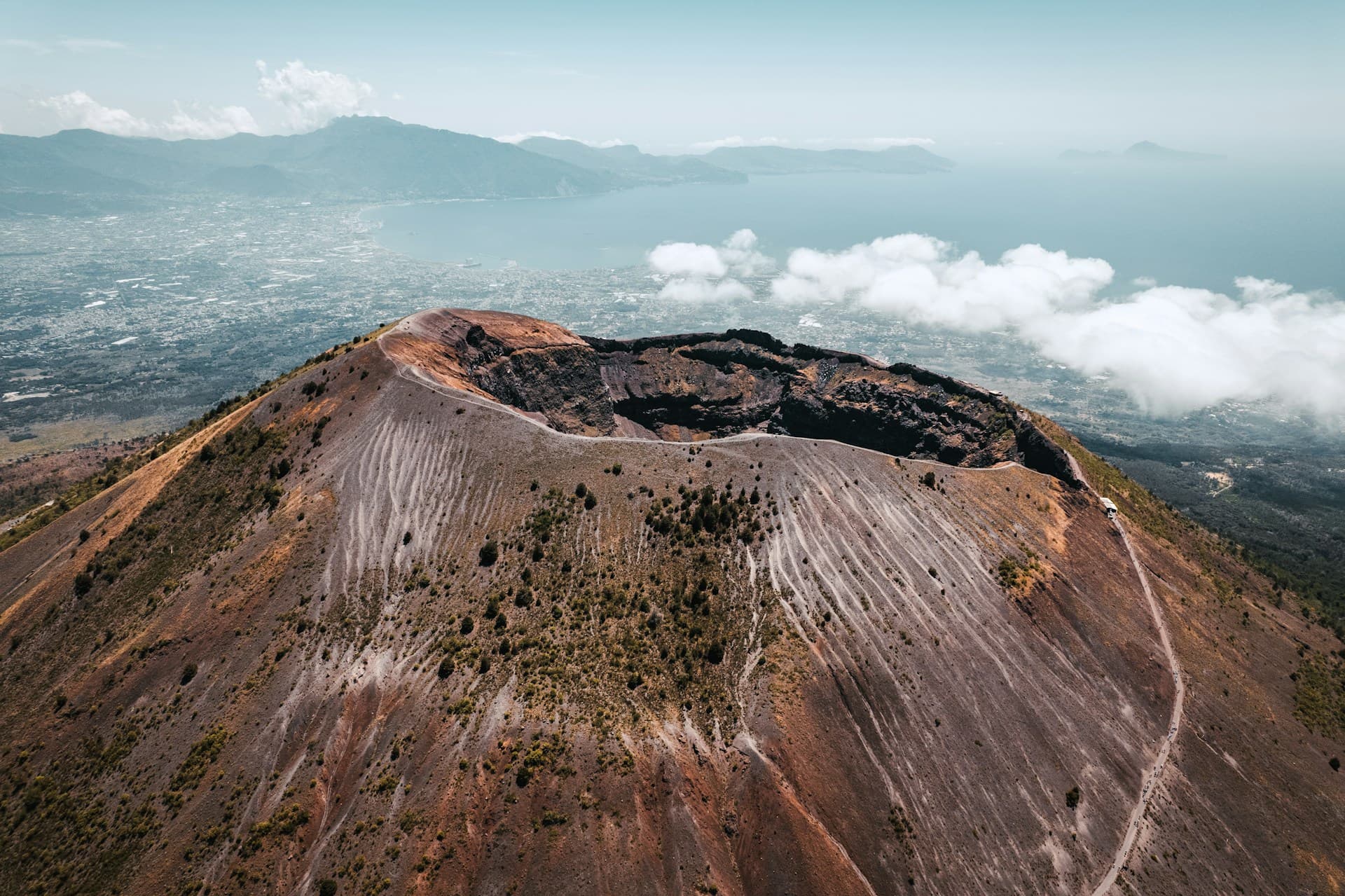
Climb the Gran Cono
It is the symbolic experience, but it must be well organized: access is regulated, tickets can only be purchased online on the authorized circuit and the path starts from an altitude of 1000 meters in the municipality of Ercolano.
Explore at least one other path of the Park besides the Gran Cono
The value of Vesuvius also lies here: the Park has 11 paths and cannot be reduced to the final climb alone.
Walk in the Valle dell'Inferno
It is one of the most evocative and representative routes of the protected area, very suitable for those who want to feel the most powerful and geological side of the Vesuvian landscape.
Discover Monte Somma and the Cognoli
The Somma-Vesuvius system is more interesting when you also understand its less touristy and wilder side.
Observe the biodiversity of the Park
Vesuvius is also a place of great naturalistic richness: the Park reports hundreds of plant species, numerous orchids, broom, and a strong presence of fauna and birdlife.
Visit Ercolano
The Park itself places the archaeological site among the essential experiences of the Vesuvian area, and the Archaeological Park of Ercolano maintains a very strong link with the landscape of the volcano.
Combine Vesuvius and Pompei in the same trip, but not at the same pace
Pompei is one of the strongest cultural gateways to the area and now has named tickets with a daily limit on entries, so it is advisable to book in advance.
Do a Vesuvian wine tasting in a cellar
Trecase and Boscotrecase are perfect for truly understanding the link between volcanic soil, Lacryma Christi, local cuisine and landscape.
Visit the MATT, Museo Archeologico Territoriale di Terzigno
A precious stop for those who want to deepen the relationship between Vesuvius, the territory and archaeological memory. It houses finds from the Roman villas of the Vesuvian area and allows you to read this landscape not only as a natural place, but also as a historical and cultural space.
Indulge in a slow walk, even without a "spectacular destination"
On Vesuvius, not everything has to be performative: often the sense of place emerges precisely from the less touristy stretches, from the vineyards, the woods, the changes in light and the points where the landscape suddenly opens up.
This is my interpretation of the territory, but it stems from the actual structure of the Park, designed precisely to be explored step by step.
Where to eat and drink

1. Cantina del Vesuvio, TrecaseI recommend it to those who want to understand Vesuvius through wine: guided tastings, local cuisine, vineyards and a view of the Gulf. It is a very consistent stop between Pompei and the climb to the volcano.
2. Casa Setaro / Vigna delle Rose, TrecaseExcellent for those looking for an experience more linked to the identity wine of the territory and a qualitative interpretation of Vesuvian grape varieties.
3. Tenuta Sorrentino / Vesuvio Inn, BoscotrecaseRecommended for a complete food and wine experience including hospitality, wine experience and local cuisine in the landscape of the Vesuvian slopes.
4. Cantine Villa Dora, TerzignoIdeal for wine lovers who want an organic winery within the Park landscape, with visits and tastings in a context closely linked to the volcanic terroir.
5. Piana delle Ginestre, ErcolanoI would choose it for the panoramic context and for a cuisine that brings together land, sea and local products, very suitable for a stop after an excursion.
6. Haccademia, TerzignoI recommend it to those who want a pizza in an area very close to the Vesuvian landscape, with a recognizable style and a location consistent with the experience of the territory. It is a suitable choice for those who, after paths and vineyards, want to stop in a place naturally linked to this side of Vesuvius.
7. Maturazioni, San Giuseppe VesuvianoIt is one of the most interesting realities in the area for those looking for a contemporary pizza that is well-rooted in the territory. It is a strong recommendation within a Vesuvian gastronomic itinerary, especially for those who want to get off the beaten path.
8. Villa Giovanna, OttavianoI recommend it because it is truly consistent with the Park experience: it is located in the access area to the route leading towards Valle dell'Inferno and the Cognoli, so it is a very natural stop before or after an outing on Path no. 1. It is a suitable choice for those who want to stay within an authentic Vesuvian atmosphere, without moving away from the Park landscape.
9. Taverna 'e Mare, Torre del GrecoFor those who want to move slightly towards the sea and eat fish with Neapolitan cuisine carefully reinterpreted.
10. Bosco de' Medici, PompeiParticularly useful for those staying in Pompei who want a place that combines a restaurant, volcanic wines and a convenient location relative to the excavations.
Where to stay

Ercolanois the best base for those who want to prioritize the Gran Cono and the Archaeological Park of Ercolano. It is practical, well-connected and suitable for those who want a trip that holds Vesuvius and archaeology together.
Trecase and Boscotrecaseare perfect for those looking for the more authentic and scenic side of Vesuvius: less urban, closer to vineyards, cellars and paths, ideal for a slower and more immersive stay.
Pompeiremains a very convenient solution for those who want to build a broader itinerary, including the excavations, Vesuvius and other stops in Campania.
Alongside these better-known areas, I would also recommend some less frequented but very interesting alternatives.
Terzignois an excellent choice for those who want to be more inside the Vesuvian landscape, with a more intimate atmosphere and privileged access to the less touristy side of the territory. It is a good base for those who love paths, vineyards and a more direct relationship with the volcano.
Ottavianois suitable for those looking for a livelier context but still strongly linked to the Park. It has a strategic position for exploring the inner side of Vesuvius and is also useful for those who want to move between nature, residential centers and services.
San Giuseppe Vesuvianocan be an interesting solution for those who wish to stay in an area less traveled by international tourism, more everyday and local, and use the stay as a starting point to explore the Vesuvian area more freely.
If the goal is a more classic and comfortable holiday, Ercolano or Pompei remain the simplest choices. If, on the other hand, you are looking for a more authentic, slow and less conventional experience, Terzigno, Ottaviano and San Giuseppe Vesuviano can offer a truer and less filtered Vesuvius.
Good to know before you go
To visit the Gran Cono, it is best to organize in advance: tickets can only be purchased online through the authorized channel, and the Park releases availability in time slots. Parking is not allowed in the area at altitude 1000 and at the moment the official site also reports the temporary absence of public toilets, so it is good to arrive prepared.
Those arriving from Napoli can use the Circumvesuviana/EAV towards Ercolano or Pompei, or dedicated connections. A tourist shuttle service for Vesuvius operates from Ercolano Scavi; from Pompei there is also the 808 bus line, but on this route it is always advisable to check EAV updates before leaving, as there may be operational variations related to traffic and weather.
The best period is spring and autumn: beautiful light, more livable temperatures and better walking quality. In summer, Vesuvius can be very exposed and requires water, a hat and smart timing, preferably early morning or late afternoon. This is an experiential assessment, but consistent with the nature of the paths and with the recommendations of the Park, which always invites you to check weather and conditions before the excursion.
For a minimal visit I recommend at least one full day, but Vesuvius is better with two days: one for the Gran Cono or a Park path, one for Ercolano or Pompei plus a winery or a gastronomic stop on the Vesuvian slopes. In this way, the trip does not remain superficial and the territory is truly understood as a system, not as a single attraction. This is my proposal for a pace, built however on the real possibilities of the area.