.jpg&w=3840&q=75)

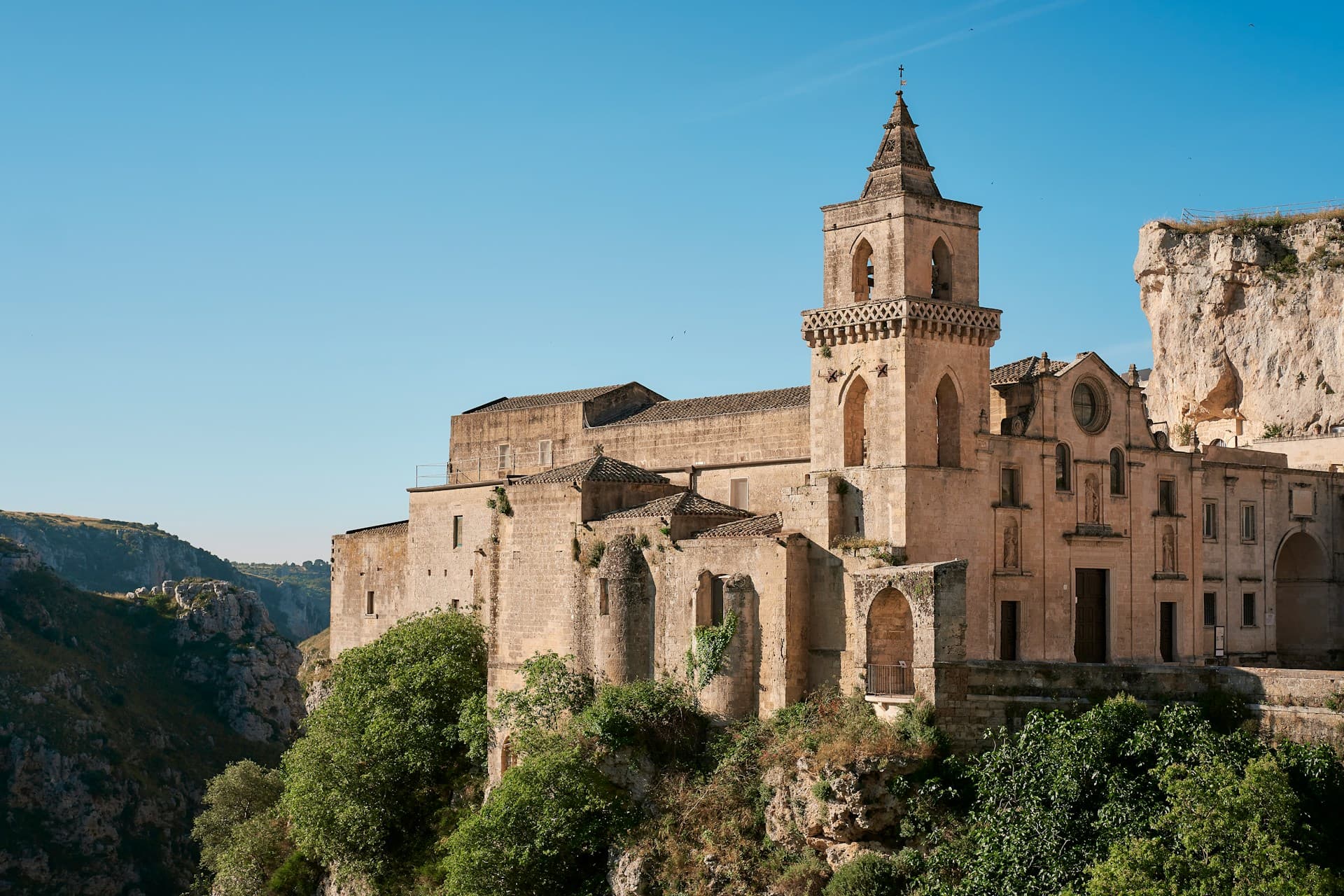
The first time I drove into Castelmezzano, I genuinely thought my GPS had malfunctioned. You exit a tunnel and suddenly there it is: a cluster of stone houses clinging to jagged peaks that look more like the Alps than southern Italy. The Lucanian Dolomites are one of those landscapes that feel impossible until you're standing in front of them.
Castelmezzano sits about an hour and fifteen minutes from Matera and roughly two hours from my home base in Bari. It's become more popular in recent years, partly because scenes from the James Bond film No Time to Die were filmed in nearby areas, and partly because of the Volo dell'Angelo zipline that connects it to the neighboring village of Pietrapertosa. But most visitors treat this place like a pit stop. They're missing everything that makes it worth the winding drive.
The village dates back to the 10th century, built as a refuge from invaders. The name comes from castrum medianum, Latin for "middle fortress." You can still see ruins of the Norman castle carved into the rock above town. Both Castelmezzano and its twin village Pietrapertosa hold the Borghi più belli d'Italia designation, and for once, the title is earned.
Things to Do

Walk the Gradinata Normanna
The Gradinata Normanna is a stone staircase carved directly into the rock that climbs toward the ruins of the Norman castle. The castle itself is mostly crumbled walls at this point, but the views from the top justify the climb. You can see straight across the valley to Pietrapertosa, which sits at 1,020 meters and is officially the highest village in all of Basilicata. Explore the Historic Center The main piazza, Piazza Emilio Caizzo, is small and unpretentious. A few cafes with outdoor tables, locals chatting, cats sunning themselves on warm stones. The viewing platform just outside the Chiesa di Santa Maria dell'Olmo offers one of the best vantage points for photographing the village against its rocky backdrop. Come at golden hour if you can. Hike the Sentiero delle Sette Pietre If you only do one thing beyond wandering the village, hike the Percorso delle Sette Pietre (P is a stone staircase carved directly into the rock that climbs toward the ruins of the Norman castle. The castle itself is mostly crumbled walls at this point, but the views from the top justify the climb. You can see straight across the valley to Pietrapertosa, which sits at 1,020 meters and is officially the highest village in all of Basilicata.
Explore the Historic Center
The main piazza, Piazza Emilio Caizzo, is small and unpretentious. A few cafes with outdoor tables, locals chatting, cats sunning themselves on warm stones. The viewing platform just outside the Chiesa di Santa Maria dell'Olmo offers one of the best vantage points for photographing the village against its rocky backdrop. Come at golden hour if you can.
Hike the Sentiero delle Sette Pietre
If you only do one thing beyond wandering the village, hike the Percorso delle Sette Pietre (Path of the Seven Stones). This two-kilometer trail connects Castelmezzano to Pietrapertosa through the valley below. It follows an old farming path and features seven stone art installations, each representing a chapter from a local folk tale about a man named Vito who danced with witches. Audio speakers along the path play fragments of the story in Italian.
The trailhead in Castelmezzano is near the cemetery. Follow signs for "Sette Pietre." The path descends into the valley, crosses the Caperrino stream, then climbs up to Pietrapertosa. Allow 60-90 minutes one way depending on your pace. The terrain is uneven in places with some steep sections, so proper footwear matters. Avoid midday in summer when there's little shade.
Here's the practical issue: once you reach Pietrapertosa, you need to get back. Options include hiking back (another 60-90 minutes), arranging a ride, or taking the zipline return flight.
Take the Volo dell'Angelo (If That's Your Thing)
The Volo dell'Angelo runs from roughly May through November. You fly between the two villages on steel cables, reaching speeds up to 120 km/h at heights of over 400 meters. The San Martino line runs from Pietrapertosa to Castelmezzano (1,415 meters), while the Peschiera line goes the opposite direction (1,452 meters).
Tickets cost around €35-60 depending on whether you fly solo or in pairs, and the round trip includes both directions. You must book online in advance because same-day availability often sells out, especially on weekends and in August. Weight requirements apply: 40-120 kg for solo flights, combined weight under 150 kg for pairs. Minimum age is 14 for solo, 12 with an adult.
A shuttle takes you from the ticket office to the departure point, then you walk about 20 minutes uphill to the launch platform. The whole experience (both flights, shuttles, waiting) takes 2-3 hours.
Where to Eat and Drink

Al Becco della Civetta
The standout is Al Becco della Civetta, a small restaurant tucked into the pedestrian center at Vico I Maglietta 7. It holds a Michelin Bib Gourmand, which means excellent quality at reasonable prices. The kitchen is run entirely by women, now in its third generation, with Antonietta preserving traditional Lucanian recipes.
Order the peperoni cruschi (dried sweet peppers, fried until crispy) to start. They're a Basilicata specialty you won't find done better anywhere else. The cavatelli with pezzente sausage is the pasta to get. If they have lamb from the Lucanian Dolomites with herbs from the Gallipoli Cognato park, order it. Expect to spend around €35-45 per person with wine. Book ahead, especially for dinner or weekend lunch.
Casual Options
For something simpler, there's a small rosticceria on Via Roma where you can grab pizza by the slice. The historic Bar Pallante on the main piazza does good coffee and cornetti in the morning. In summer, look for Peperusko, which serves what locals consider the best artisanal gelato in the region. They have a flavor made with peperone crusco that's worth trying.
Maudoro
Maudoro on Corso Vittorio Emanuele II focuses on local Lucanian products. It's part shop, part tasting room, where you can sample and then buy what you've eaten. Good option for an aperitivo with regional wines and cured meats.
Where to Stay

Castelmezzano is small, so accommodation options are limited but charming. Most are family-run B&Bs or vacation rentals in restored village houses.
In the Village
Hotel Dolomiti is the main hotel in town, recently renovated with modern rooms and a restaurant. Good option if you want something straightforward with services. The restaurant gets solid reviews and has terrace seating with mountain views.
La Locanda di Castromediano is a 3-star hotel in a restored palazzo with traditionally decorated rooms. Has a restaurant and bar on-site.
B&B La Perla nelle Dolomiti sits in the heart of the village with views of the surrounding peaks. Family-run, good breakfast, and the owners are helpful with local tips.
Casa delle Stelle is a vacation rental with a panoramic balcony and one of the best views in town. Has a mezzanine bedroom with a skylight so you can literally sleep under the stars.
Just Outside Town
Agriturismo Grotta dell'Eremita is a working farm about 10 minutes from the village center. Good for families or anyone wanting more space and quiet. They do home-cooked meals with their own produce.
La casa nel verde is run by Pasquale and Elisa on the outskirts with a garden and peaceful setting. Excellent breakfast and a terrace for relaxing after the day's heat passes.
Expect to pay €70-120 per night for most options. Book ahead for summer weekends.
Day Trips and Nearby Towns

Pietrapertosa
Just across the valley, Pietrapertosa is Castelmezzano's twin village. At 1,020 meters, it's the highest town in Basilicata. The Arab-Saracen quarter called Arabata is a maze of tight alleys and stone steps that haven't changed in centuries. The ruins of Castello Saraceno sit at the top with sweeping views. You can reach it by car (about 30 minutes via winding roads), by hiking the Seven Stones path, or by zipline.
Craco
About 40 minutes south, Craco is the famous ghost town. It was abandoned after a landslide in 1963 and now sits frozen in time, used as a film location (including for The Passion of the Christ). You must book a guided tour to enter. The eerie, photogenic ruins are worth the detour if you have time.
Matera
An hour and fifteen minutes east, Matera is the obvious pairing. The Sassi cave dwellings are a UNESCO World Heritage site and one of the oldest continuously inhabited places on earth. Many people base themselves in Matera and visit Castelmezzano as a day trip, which works well. The drive between them passes through rolling Basilicatan countryside.
Campomaggiore Vecchio
Only 15 minutes from Castelmezzano, this is another ghost town but with a different story. It was built in the 18th century as a utopian model village designed for harmony between people and land, then abandoned after earthquakes. Atmospheric and much less visited than Craco.
Gallipoli Cognato Regional Park
Both villages sit within the Parco Regionale Gallipoli Cognato, which offers additional hiking trails through the Lucanian Dolomites beyond the Seven Stones path. Good for a full day of walking if you want to go deeper into the mountains.
Other Things to Know Before You Go

Getting There
You'll need a car. Public transport exists but it's limited and will eat up your day. From Matera, take the SS7 and then follow signs toward Castelmezzano via Albano. The drive takes about 75 minutes through rolling farmland that eventually gives way to dramatic mountain roads. From Bari, head toward Altamura and then continue west. Budget around two hours.
The road isn't scary despite what some travel forums claim. It's winding, yes, but well-maintained with guardrails where they matter. The final approach through a tunnel deposits you at a large parking lot called Belvedere Giuseppe Padula.
Parking
There are a few options. The large lot after the tunnel (Belvedere Giuseppe Padula) is the easiest but leaves you with a decent walk down into the village. If you arrive early (before 10 AM) or visit outside of summer weekends, you can usually find spots closer to the center along the road that curves down toward Piazza Caizzo. Expect to pay a few euros. The town center is pedestrian-only.
What to Wear
Comfortable shoes with good grip. You'll be navigating stone staircases and steep alleys. If you're hiking the Seven Stones path, proper hiking shoes are worth it.
When to Visit
Avoid August and summer weekends if you want the village to yourself. May, June, September, and October offer the best balance of good weather and manageable crowds. The shoulder seasons also mean you'll actually be able to get a table at Al Becco della Civetta without booking weeks ahead.
Weekdays are always quieter. If you're combining this with a trip to Matera, consider making Castelmezzano a morning stop on your way there or back rather than a rushed afternoon addition.
Language
English is limited here. A few phrases of Italian go a long way, and locals genuinely appreciate the effort. Restaurant menus may not have English translations.
How Long to Stay
A day trip works if you're short on time, but spending one night lets you experience the village without the day-tripper crowds. Early morning and evening are when Castelmezzano is at its most atmospheric, when the light hits those peaks and the tour buses have gone.
Castelmezzano is genuinely special, not because it's undiscovered (it isn't anymore) but because most people still don't give it enough time. An hour wandering and a zipline ride doesn't capture what makes this place memorable. Stay for lunch. Walk the Seven Stones path. Watch the light change on those impossible peaks. That's the version of Castelmezzano worth driving two hours of mountain roads to find.