.png&w=3840&q=75)
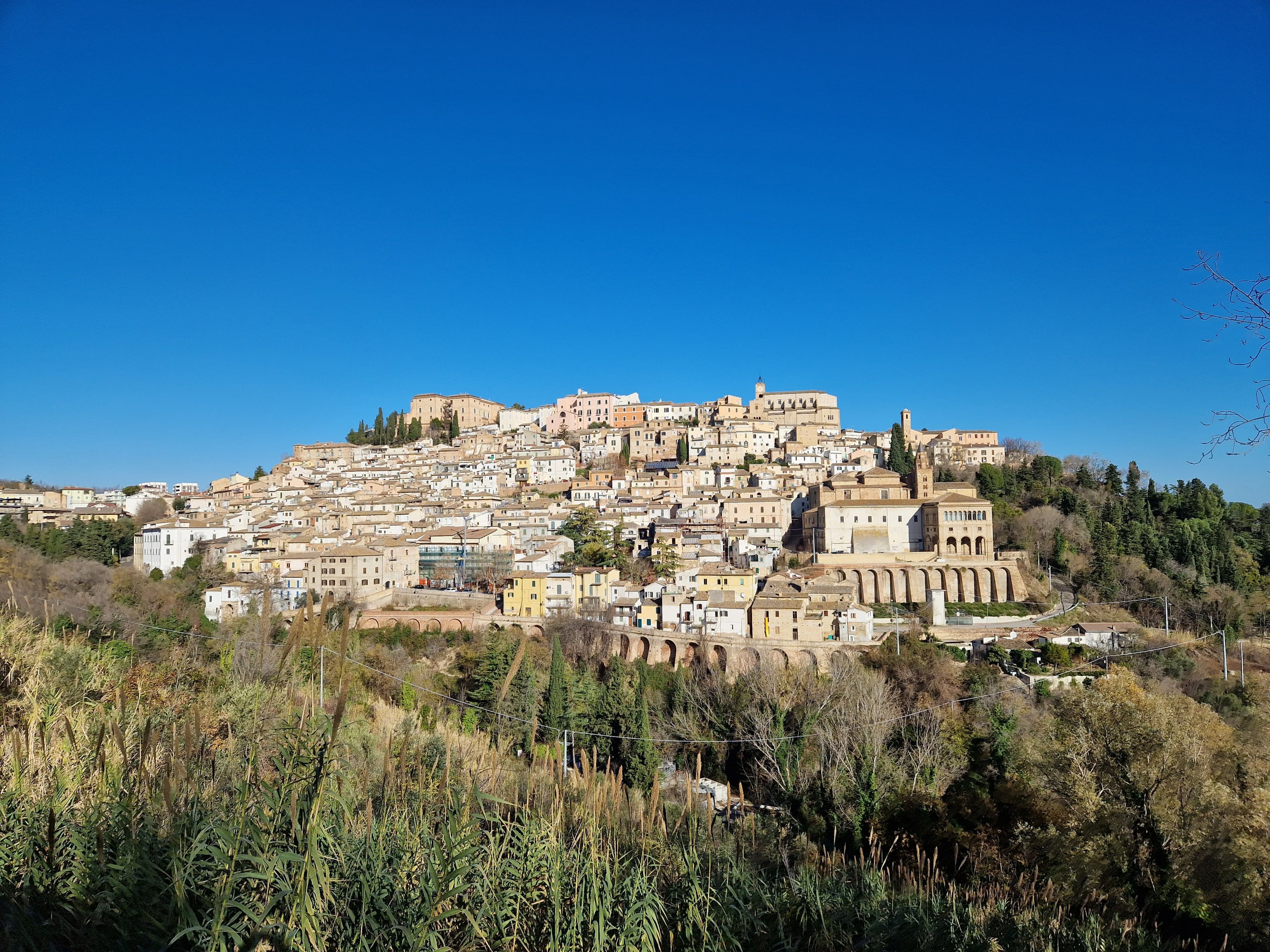
Abruzzo has a problem that works in your favor: nobody seems to know it exists. While visitors pile into Cinque Terre and the Amalfi Coast, this wild pocket of central Italy sits mostly empty, waiting. And within Abruzzo, even fewer people make it to the Valle dell'Orfento—a gorge so pristine that nature journals rank it among Italy's most biodiverse ecosystems.
The Majella has always been part of my life. My father brought me to Valle dell'Orfento before I could walk the whole trail myself, and I've returned dozens of times since—different seasons, different reasons, but always the same feeling when you reach the hermitage. This is the hike I take visitors on when they ask for the real Abruzzo.
What You're Getting Into

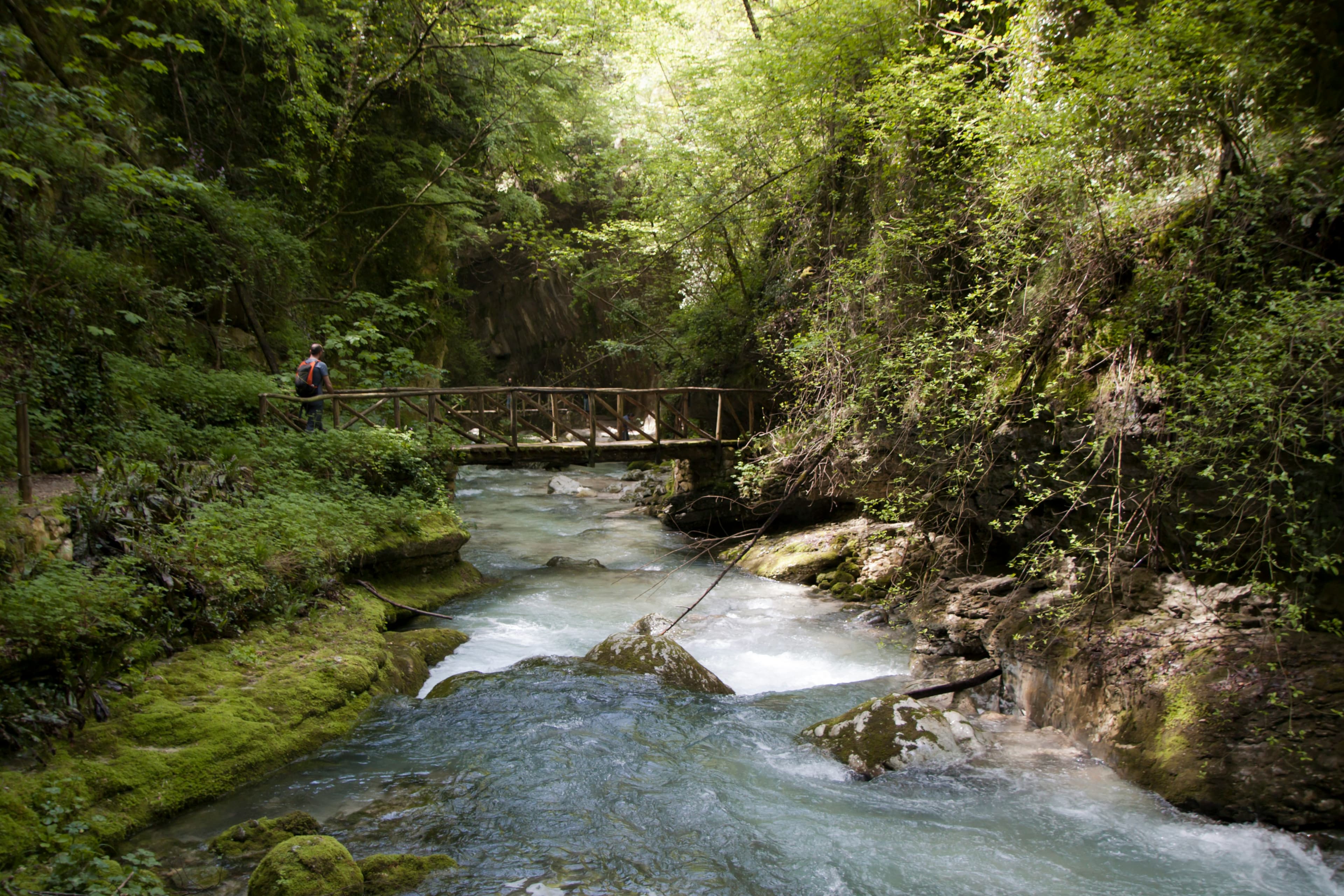
The Valle dell'Orfento is Maiella National Park's best-kept secret—a 2,600-hectare nature reserve that became protected land in the 1970s. It's the only canyon on the Maiella massif with a permanent river, which means lush vegetation, actual waterfalls, and wildlife you won't see elsewhere.
The hike I'm recommending combines two experiences: the riverside trail through the gorge, and a detour to the Eremo di San Bartolomeo in Legio, a hermitage built into the rock face that dates to the 13th century. Total walking time is about 3.5 hours. You'll cover roughly 9 kilometers with 650 meters of elevation change—moderate difficulty, but you'll want proper hiking shoes.
Before You Go: Registration and the Visitor Center
This is important. You can't just show up and start walking. Access to the Valle dell'Orfento requires free registration, either at the Centro Visita Valle dell'Orfento in Caramanico Terme, or by scanning QR codes posted at trailheads.
The visitor center is at Via del Vivaio, 1 in Caramanico Terme. See it on Google Maps. Hours are 9 AM–1 PM year-round, with extended afternoon hours (3 PM–7 PM) from mid-June through mid-September. During peak summer (late July to late August), they're open continuously from 8 AM to 7 PM.
Stop here first. The staff can update you on trail conditions, hand you a proper map, and point you toward the day's best route. They also rent hiking poles and baby carriers if you need them. The small museum inside is worth 20 minutes—it explains the ecosystem and the history of the hermits who lived in these caves.
The Route: Starting from Decontra

For the hermitage hike, skip the more crowded trailheads in town. Instead, drive to the hamlet of Decontra, just outside Caramanico Terme. There's a dirt parking area near a small chapel with a bell tower. Look for trail markers labeled "CP" (for Capanne in Pietra, the dry stone hut paths) and signs for the "Anello della Valle Giumentina."
Head right from the parking area, following the white dirt road. The first stretch is flat farmland and scattered forest—not dramatic, but peaceful. You'll pass ancient dry-stone huts (capanne) that shepherds built centuries ago for seasonal shelter. The largest one in the region sits along this route.
After about 45 minutes of gentle walking, watch for the signpost pointing toward Eremo di San Bartolomeo. The trail drops steeply into a narrow ravine—about 150 meters down—through dense forest. This is the only challenging section. Take your time. There are no railings, and a slip here could hurt.
The Hermitage Itself

The Eremo di San Bartolomeo appears suddenly, built into the cliff across a small valley. Stone rooms nestle under an overhang, almost camouflaged against the rock. A natural spring flows nearby—locals still call the water miraculous.
The hermitage was active in the 13th century, part of a network of cliff-dwelling retreats established by Pietro da Morrone, who later became Pope Celestine V. (He's the one who famously resigned the papacy after five months.) These caves offered isolation and silence for monks seeking spiritual retreat. During World War II, the valley sheltered escaped Allied prisoners and Italian partisans; villagers in Caramanico risked their lives hiding them.
Step inside the cool, dim rooms. The relief from summer heat is immediate. You can see where monks slept, where they prayed. It's smaller than you'd expect—intimate, almost secret.
The return climb takes about 30 minutes. Loop back along the valley rim for views across the entire gorge, then follow signs back to Decontra.
Alternatively: The Scalelle Trail for Beginners
If you want something easier, the Sentiero delle Scalelle starts directly from the visitor center in Caramanico Terme. It's about 4 kilometers round-trip, rated easy, and follows the Orfento River through the gorge on wooden bridges and maintained paths. You'll cross the river multiple times, pass small waterfalls, and walk beneath overhanging rock. Allow 2 hours.
This trail is family-friendly and gives you a taste of the valley without the steep descent to the hermitage. But it's also the more popular option—go early on summer mornings to avoid groups.
What to Know Before You Hike

Best time to visit: May through October. The valley is stunning in late spring when wildflowers bloom, and again in autumn when beech forests turn gold and red. Mid-summer can be hot—start early. Avoid late May and early June if you want solitude—school groups from Pescara and Chieti flood the trail during gite scolastiche. Late September is my favorite: the beech forest turns gold, the summer crowds are gone, and the river still has water.
What to bring: Proper hiking shoes (the hermitage descent is steep and rocky), at least 1.5 liters of water per person, sun protection, and a light layer for the cool gorge. There's no food on the trail.
Dogs: Not allowed in most of the reserve. The valley is Zone A protected habitat for wolves, bears, and chamois. One short section near the main bridge permits leashed dogs, but honestly, leave them home.
Getting there: Caramanico Terme is about 2 hours from Rome by car. Take the A25 motorway toward Pescara, exit at Scafa-Alanno, then follow the SS487 for 20 kilometers into the mountains. Public transport exists but is impractical—buses from Scafa run infrequently.
Where to Eat After
You'll be hungry. Caramanico Terme is small, but there are a few reliable spots.
For a simple, solid lunch: Bar Tabacchi La Sorgente near the main square does panini and local cheeses. In Caramanico, stop at Bar Centrale on the main piazza for coffee before the hike. For lunch after, Locanda del Barone does proper Abruzzese mountain food—chitarra pasta with lamb ragù, local pecorino, arrosticini if they're grilling.
The village is also known for its thermal baths, if you want to soak tired legs. The historic spa center is currently closed for renovation, but check locally for updates on smaller facilities.
Why This Matters
The Valle dell'Orfento is the opposite of Instagram-famous Italy. No crowds posing for photos, no ropes keeping you back from the views, no tour guides with microphones. Just you, the forest, a 700-year-old hermitage, and the sound of water.
This is what Abruzzo does better than almost anywhere else in the country. It gives you Italy before the guidebooks arrived—wild, quiet, and unapologetically itself. The registration system isn't bureaucracy for its own sake; it's how they keep the valley pristine.
Go before that changes.