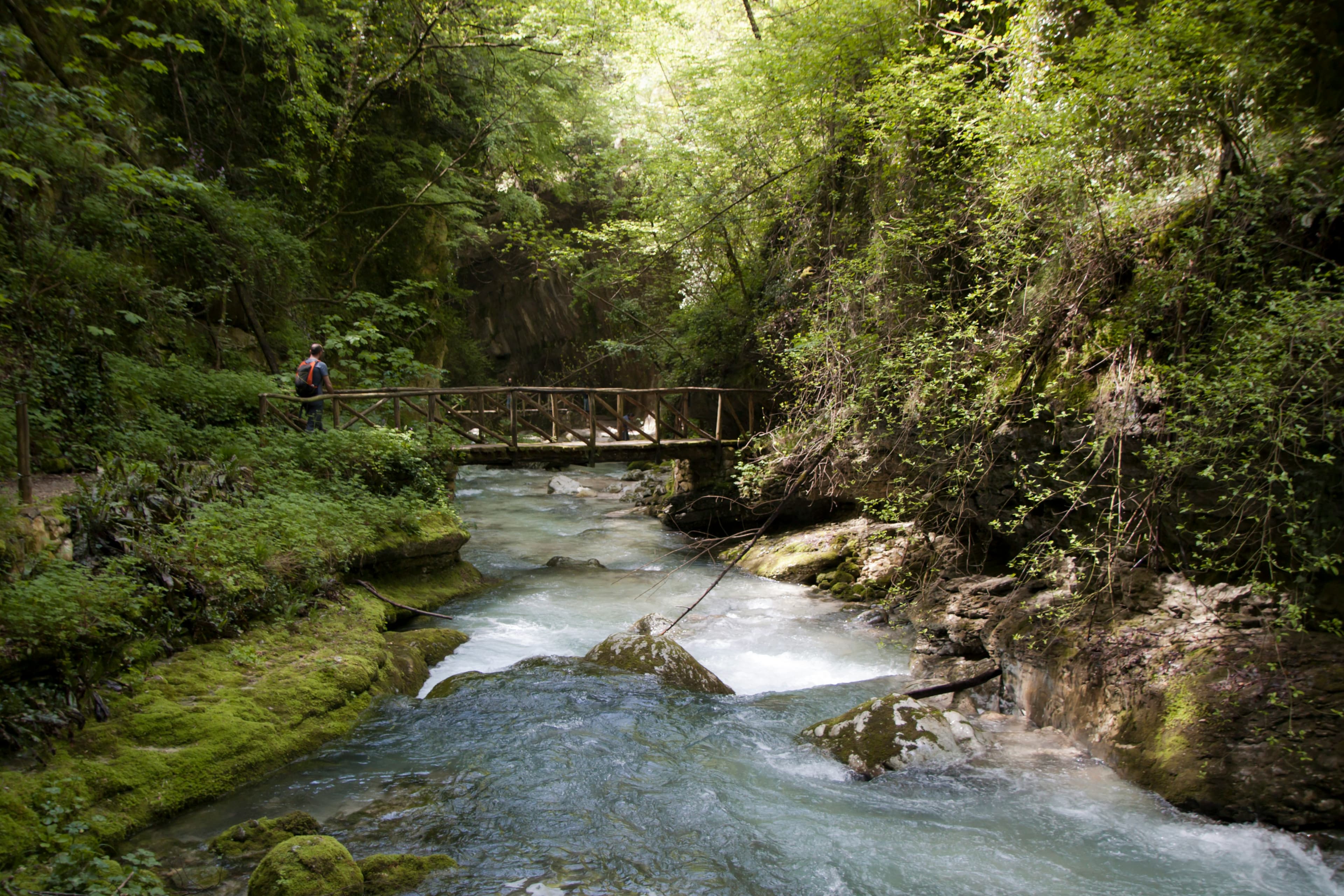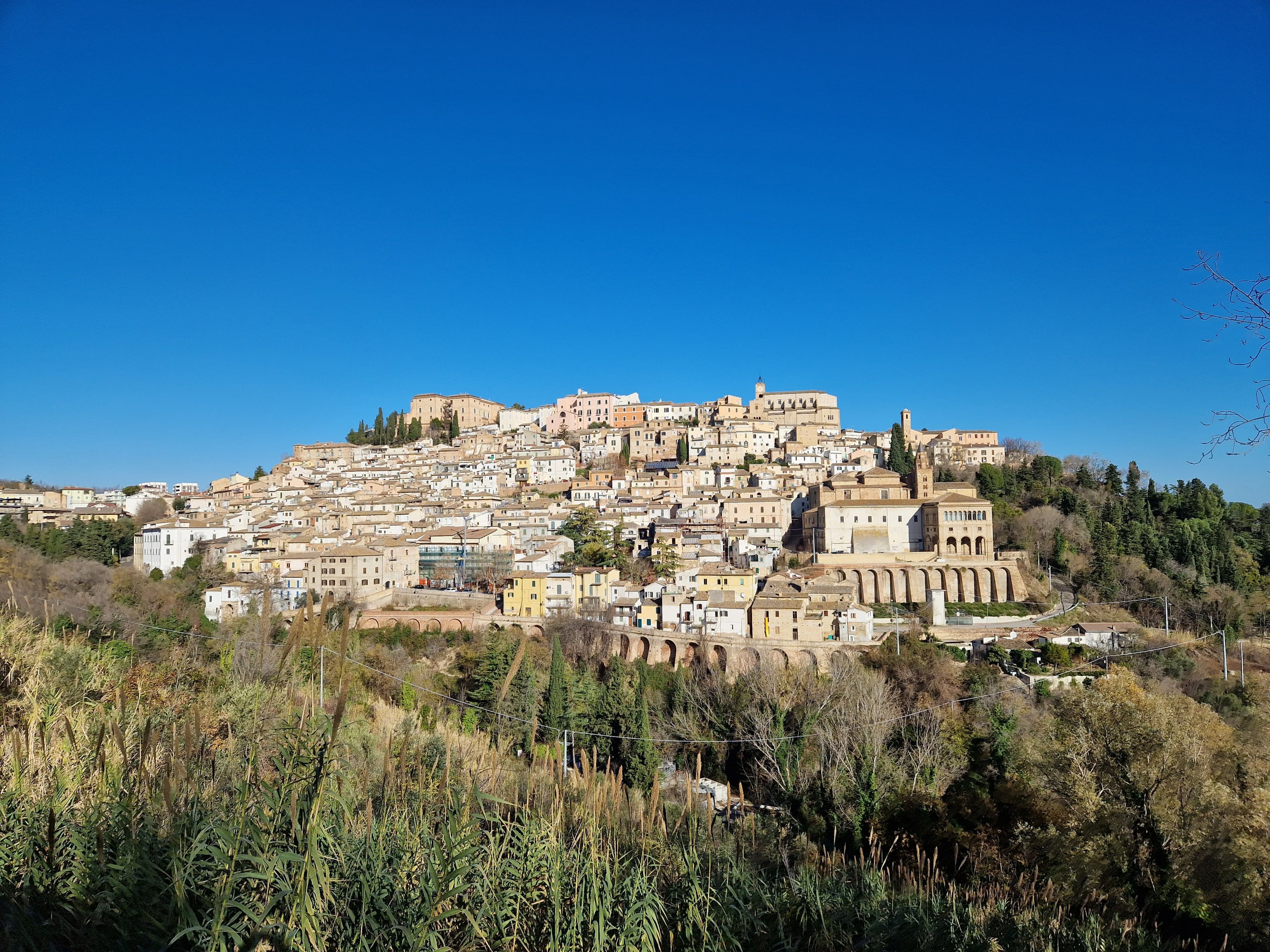

Loreto Aprutino rises in the heart of the ancient Vestina area, on a hilly ridge overlooking a landscape shaped by centuries of agriculture and immense olive groves. Its origins are rooted in the Italic world, as evidenced by the archaeological finds in the area, while the structure of the village reflects the medieval transformations that took place under the Lombards and Normans, who turned it into a fortified citadel. The historic center is not a uniform set of stone houses, but a weave of buildings from different eras, winding alleys, stairways, and glimpses that tell a layered and authentic story. The church of San Pietro, with its Renaissance portico, and the historic buildings dotting the village recall the central role Loreto played over the centuries. Around the town, olive trees define the landscape and explain the deep bond with extra virgin olive oil, a product that here is not just gastronomic excellence, but part of the collective identity. Visiting Loreto means entering a place that does not put on a show, but naturally displays its own history, its own rhythm, and its own relationship with the land.
The most representative tradition of the town is the feast of San Zopito, celebrated on Pentecost Sunday, a rite that combines the sacred, popular memory, and symbols of the rural world. Legend has it that in 1711, as the Saint's relics passed by, an ox spontaneously knelt while its master continued to plow the field: from this episode comes the ritual of the Ox of San Zopito, which still today crosses the village covered in colored drapes and accompanied by a girl dressed in white, the angel. The procession advances through ritual kneelings, blessings, and traditional music, creating an atmosphere that involves the entire community. Alongside this rite is the Return of the Vetturali, a reenactment that recalls the ancient rural guilds: horses, mules, and decorated carts travel through the streets of the center carrying agricultural products as a sign of devotion, representing oil millers, farmers, pruners, and above all the vetturali, heirs to the agricultural transporters of the past. The following Monday, the festival culminates in the meeting between the ox and the silver bust of the Saint, an 18th-century work linked to popular tales and historical events. These rituals, still very much participated in today, tell the agricultural and community soul of Loreto Aprutino, offering the traveler an authentic experience made of ancient gestures, living history, and a deep bond with one's roots.
In addition to traditions, Loreto Aprutino preserves a historical and artistic heritage that enriches the visit. The church of Santa Maria in Piano, with its extraordinary cycle of 15th-century frescoes, represents one of the most significant monuments of medieval Abruzzo, while the Oil Museum, housed in the Castello Amorotti, tells the long history of local oil production through tools and artifacts. Walking through the village, you encounter Renaissance palaces, porticos, bell towers, and small architectural details that testify to the role Loreto played over the centuries as an agricultural, religious, and cultural center. It is not a town built to amaze, but a place that reveals itself little by little, through its history, its traditions, and its landscape. For the traveler seeking authenticity, material culture, and direct contact with the real life of an Abruzzese village, Loreto Aprutino represents a sincere and deeply identity-driven destination.
10 unmissable things to do

1. Stroll through the historic center following its natural slopes
Walking through the historic center of Loreto Aprutino is the best way to understand the character of the town. The village is not built like a "postcard town," but as a living organism that follows the natural contour of the hill: narrow alleys, sudden curves, stairways connecting different levels, and small clearings that open up suddenly. Walking without haste, you perceive the layering of eras — from Vestine origins to medieval transformations, up to Renaissance interventions — and you encounter details that tell of daily life: portals worn by time, arches joining houses, views showing the olive groves all around. It is a simple experience, but it is the one that allows the traveler to truly enter the rhythm of the village, observing how history and geography have shaped the town.
2. Visit the Church of San Pietro and its Renaissance portico
The Church of San Pietro is one of the places that best tells the deep history of Loreto Aprutino. Located in the upper part of the village, it dominates the historic center with its sober and authoritative presence. The entrance is marked by a Renaissance brick portico, a rare element in Abruzzo: three bays with cross vaults that frame the perspective of via del Baio and introduce a collected, almost suspended atmosphere. The portico is decorated with coats of arms and mullioned windows overlooking the town, small details that reveal the layering of centuries.
Inside, the church opens into three naves with frescoed side chapels, including the one dedicated to San Zopito, which preserves part of the religious and popular memory of the village. The structure, rebuilt in the sixteenth century, maintains a harmonious balance between architecture, light, and silence, offering the visitor an ideal place to understand the link between Loreto and its history. The bell tower, separated from the main body and characterized by a massive tower, also contributes to defining the identity of the complex. Visiting San Pietro means entering the symbolic heart of the town, where spirituality, history, and community have been intertwined for centuries.
3. Enter the Church of Santa Maria in Piano and admire the Last Judgment
The Church of Santa Maria in Piano is one of the most surprising places in all of Abruzzo, a building that from the outside appears simple, almost modest, but which inside preserves an artistic heritage of extraordinary value. Built on an ancient temple dedicated to Janus and remodeled over the centuries, the church preserves a cycle of 15th-century frescoes that leaves one speechless for its quality, extent, and narrative force. The most famous is the Last Judgment of 1429, a complex work rich in symbols, articulated on multiple levels of reading: saints kneeling at the feet of the instruments of the Passion, Christ in Majesty supported by angels, the very thin bridge of the "Hair" that tests souls, Saint Michael weighing destinies, and a Paradise represented as a luminous garden.
It is a place that surprises anyone who enters, because one does not expect such a powerful pictorial cycle in a hilltop village. The frescoes, though marked by time, maintain a chromatic vivacity and a theological depth that tell much about medieval spirituality and the history of the territory. Visiting Santa Maria in Piano means coming into contact with one of the most important artistic testimonies of the region, a place where art, faith, and memory are uniquely intertwined.
(Temporarily under renovation)
4. Visit the Oil Museum in Castello Amorotti
The Oil Museum, housed inside Castello Amorotti, is one of the places that best tells the deep identity of Loreto Aprutino. The building, built in neo-Gothic style in the 19th century, still preserves the atmosphere of a small historic residence, with its octagonal tower and architectural details recalling Aragonese fortifications. Inside, the museum path accompanies the visitor through the history of local olive growing: ancient presses, millstones, work tools, period photographs, and objects that testify to how oil production has shaped the economy, landscape, and daily life of the town for centuries.
The visit allows one to understand not only the technique but also the culture behind Loreto's extra virgin olive oil: the care of the olive groves, the selection of cultivars, the role of the oil millers, the traditions linked to harvesting and milling. It is a place that combines history, memory, and artisan knowledge, offering the traveler a privileged point of view on what makes Loreto Aprutino one of the Italian capitals of oil. Leaving the museum, the profile of the olive groves surrounding the village takes on an even deeper meaning.
5. Visit the Acerbo Ceramics Museum, one of the most important collections in Abruzzo
The Acerbo Ceramics Museum is an essential stop for those who want to discover the artistic soul of Abruzzo. The collection, desired and enriched over his lifetime by Baron Giacomo Acerbo, brings together three ancient collections of Abruzzese majolica, to which acquisitions and donations have been added over time, expanding its historical and cultural value. It is a place that allows one to follow, almost like in a visual story, the evolution of the workshops of Castelli — one of the most famous ceramic centers in Italy — and the workshops that were influenced by them, from the early sixteenth century to the full eighteenth century.
Among the rooms, you encounter rare examples of the compendiary style, a large inkwell from 1588, an extraordinary collection of pharmacy jars, and a core of fine majolica "for porcelain use," characterized by an elegant and light rocaille taste. The works tell of dynasties of master potters, refined techniques, decorative motifs ranging from the sacred to the naturalistic, up to the vigorous Baroque illustrative vein that made Castelli production famous. Visiting the Acerbo Museum means entering a world made of intense colors, family stories, cultured craftsmanship, and creativity: a heritage that enriches the visit to Loreto Aprutino and reveals a surprisingly artistic Abruzzo.
6. Visit the Casamarte Municipal Antiquarium and discover the oldest roots of the territory
The Casamarte Municipal Antiquarium is the place where the history of Loreto Aprutino shows itself in its most authentic depth. The rooms collect the results of archaeological research conducted in the municipal territory, returning a surprising picture of human presence in this area: from Paleolithic tools to evidence of the Vestine civilization, up to Roman and medieval finds. It is a museum that allows one to understand how this territory has been inhabited, lived in, and shaped for millennia.
Among the most fascinating finds are the Vestine grave goods (7th–5th century BC), with weapons, pottery, jewelry, and cult objects that tell of a refined, organized, and culturally rich society. The section dedicated to the Sanctuary of Feronia is one of the most suggestive points: fragments of the cult statue of the goddess, a statuette of Jupiter, an altar, and votive materials testify to the religious vitality of the Roman era and the role of the territory as a crossroads of cults and exchanges.
There is no shortage of finds from the rustic villas of the imperial age: mosaics, polychrome plasters, columns, imported ceramics, and everyday objects that return the image of an already structured and prosperous agricultural landscape. Visiting the Antiquarium means taking a trip back in time and understanding how Loreto Aprutino has always been a central place, inhabited by communities capable of leaving deep traces in the history of Abruzzo.
7. Discover the Permanent Exhibition of Pre-cinema, a journey into the first moving images
The Permanent Exhibition of Pre-cinema is one of the most surprising places in Loreto Aprutino: an experiential path that allows you to touch the tools and optical machines that prepared the birth of modern cinema. It is not a museum to be observed in silence, but a space where you experiment, play, and imagine, retracing the studies on the persistence of vision and the inventions that, in the nineteenth century, gave life to the first moving images created by man.
The path displays a series of original or reconstructed gadgets based on period models, all perfectly functioning: from the Thaumatrope to the Phenakistiscope, from the Shadow Theater to the Camera Obscura, up to the Magic Lantern and the first cinematographic projectors. Each device tells a fundamental step of the visual imagination, showing how curiosity and ingenuity transformed simple optical illusions into an artistic language destined to revolutionize the world.
The exhibition also includes a section dedicated to the history of photography, a small video projection room, and multimedia stations to deepen themes and techniques. Making the experience even more special is the Animation Cinema Laboratory, a creative workshop where short films, shows for the Shadow Theater, and workshops dedicated to pre-cinema are designed and created. It is a perfect place for families, enthusiasts, and the curious, capable of combining play, culture, and wonder.
8. Enter the Church of San Francesco and discover one of the oldest complexes in the village
The Church of San Francesco is one of the oldest and most suggestive places in Loreto Aprutino, a conventual complex already documented in the mid-thirteenth century. Its history can still be read today in the architectural details: towards the end of the 13th century, it was enriched by an elegant portal in carved stone with small columns, the work of the Atri school, while the brick bell tower clearly recalls that of the Cathedral of Atri, a sign of the artistic links between the two centers.
The interior, completely renovated between 1601 and 1700, surprises with its breadth: today it appears as a large single nave, flanked by chapels that belonged to noble Loreto families, from the Guanciali to the Valentini. The atmosphere is sober but rich in history, and what immediately strikes you is the eighteenth-century organ located on the back wall, behind the high altar. Made by Adriano Fedri of Atri in 1745, it is an element of great value that contributes to the solemn character of the church.
Under the high altar, the body of San Clementino is kept, moved here in 1766 from the catacombs of San Callisto in Rome: a presence that adds a further level of devotion and memory to the place. Visiting San Francesco means entering a space where architecture, spirituality, and local history are harmoniously intertwined, returning to the traveler one of the oldest and most authentic souls of the village.
9. Reach the Fontana Vecchia, a nineteenth-century masterpiece of hydraulic architecture
The Fontana Vecchia is one of the most fascinating and identity-forming places in Loreto Aprutino, a public work built between 1836 and 1837 by the will of Baron Casamarte, an enlightened figure deeply linked to the development of the town. Located near Porta Palamolla, the ancient main access to the village, it stands along Via Pretara, the road that once connected Loreto to the province of Chieti: a strategic position that made it easily accessible to those arriving or departing from the town.
The original structure, reconstructible thanks to photographs from the early twentieth century, was an elegant U-shaped plant entirely made of brick, perfectly integrated into the surrounding landscape. In the center opened a large thermal basin niche, set on paired pilasters, while the two lateral arms ended with high triangular pediments with concave shoulders, surmounted by ornamental vases. Behind its architectural beauty was hidden an ingenious system of settling tanks that channeled and purified the water coming from the aquifers.
For generations, the Fontana Vecchia was a daily point of reference: here water was drawn for agriculture, clothes were washed, animals were watered, and people met. Visiting it today, one still perceives the link between functionality and aesthetic harmony, a balance that tells much about the care with which public works were designed in the nineteenth century. It is a simple place but rich in memory, capable of returning to the traveler an authentic fragment of Loreto life from the past.
10. Experience the Feast of San Zopito, the identity heart of Loreto Aprutino
The Feast of San Zopito is the most anticipated event of the year in Loreto Aprutino, a collective rite celebrated on Pentecost Sunday and the following Monday, capable of transforming the village into a large popular theater. It is an ancient festival, deeply felt, where religious tradition, community memory, and rural symbols intertwine in a unique atmosphere. The two most anticipated moments are the Ox of San Zopito and the Return of the Vetturali, rituals that for centuries have attracted hundreds of people.
Legend has it that the relics of San Zopito passed through Loreto for the first time in 1711, heading for the Cathedral of Penne. During their transit, everyone knelt except a farmer from the Parlione family, intent on plowing the field. It was his ox, however, that bent its knees before the urn, performing a gesture of veneration that tradition still remembers today. From that moment, the bond between the Saint and Loreto became indissoluble, reinforced by other miraculous episodes that repeatedly brought the relics back to the Church of San Pietro, where they are still kept today.
The protagonist of the festival is a white ox, carefully chosen and kept at rest for forty days, during which it is trained to kneel at the touch of a man's hand. On Sunday morning, the ox advances through the streets of the village covered in colored drapes and ridden by a girl dressed in white, the "angel." To the sound of the bagpipes, the procession crosses the winding streets of the historic center: the ox kneels in front of the church of Sant'Antonio, then in front of San Pietro to receive the blessing of the Abbot, and finally in the courtyard of Palazzo Valentini, where the family offers everyone "tarallucci and wine."
Alongside the rite of the ox, the procession of the Vetturali also comes to life, with horses, mules, and figures representing the ancient rural guilds: oil millers, farmers, pruners, transporters. It is a tribute to the agricultural world that for centuries sustained the life of the town. After crossing the historic center, the procession reaches San Pietro for the blessing, then concludes in Piazza Garibaldi.
On Pentecost Monday, the festival continues with the meeting between the ox and the silver bust of the Saint, a refined 18th-century work. The procession crosses the village in an atmosphere of great participation, evoking a past in which the bust was hidden inside an oil skin to protect it from brigand raids.
Participating in the Feast of San Zopito means entering the deepest heart of Loreto Aprutino: a rite that unites faith, memory, and community, and that still today tells the living and proud identity of the town.
Where to eat and drink

Hotel La Bilancia – Teramo tradition among olive groves and hills
Hotel La Bilancia is one of those places that tell the story of Abruzzo without needing words. Immersed among olive groves, vineyards, and rolling hills, it is in a privileged position: halfway between the Adriatic Sea and the Gran Sasso massif. It is an oasis of quiet, perfect for those seeking a relaxing stay and a cuisine that respects tradition.
The restaurant is the beating heart of the structure. The kitchen looks with affection at the Teramo tradition, offering genuine dishes prepared with local ingredients. The room opens onto a well-kept garden and an open kitchen dominated by a large hearth: here meats and cheeses are cooked exclusively over embers, with oak and turkey oak wood, according to an ancient method that returns intense aromas and authentic flavors. The cellar offers a selection of regional labels and strictly D.O.C. house wines.
The hotel has 27 rooms — single, double, twin, triple, and quadruple — designed to guarantee comfort and tranquility. It is a welcoming structure, ideal both for those traveling to discover the territory and for those looking for a stable reference point between the sea and the mountains.
Hotel Di Rocco – A welcoming stop between sea, mountains, and tradition
Hotel Di Rocco is an ideal base for exploring Abruzzo: in just thirty minutes you can reach both the Adriatic Sea and the first slopes of the Gran Sasso. The structure is located along the SS81, the road that connects Chieti to Penne, and allows you to easily reach the historic center of Loreto Aprutino as well.
The rooms are simple and comfortable, all air-conditioned and equipped with a private bathroom, designed for those seeking a practical and uncomplicated stay. Free parking is an important advantage for those traveling by car.
The internal restaurant is one of the hotel's strengths: it offers sincere regional cuisine, with meat and fish specialties prepared according to tradition. It is a place suitable for both travelers and locals, and booking is recommended to guarantee a seat.
Hotel Di Rocco is a perfect choice for those who want to move between the coast and the mountains, keeping Loreto Aprutino as a convenient and welcoming reference point.
Trattoria San Pellegrino – 88 years of Loreto cuisine
Trattoria San Pellegrino is one of the historic businesses of Loreto Aprutino, born thanks to Za' Flumen and carried on for almost ninety years with the same dedication as in the past. It is a place that preserves the gastronomic memory of the town: simple recipes, authentic flavors, dishes that tell the Abruzzese tradition without any forcing.
Here you can eat like in the homes of the past: homemade pasta, robust sauces, meats cooked with patience, traditional side dishes. It is a cuisine that does not seek special effects, but that wins you over with sincerity and continuity.
The trattoria also offers takeaway food, outdoor seating on milder days, and convenient private parking. It is the ideal place for those who want to experience the real Abruzzo, the one that passes through the table and family stories.
La Casina Rosa – A masseria of women, memory, and landscape
La Casina Rosa is a masseria that carries with it an intimate and family story: a gift of love passed from generation to generation, always guarded by a female figure. This is why it is called "in rosa": a place born as a refuge, as a return to roots, as a sensory journey through tastes, colors, and scents that belong to the deepest memory of Abruzzo.
We are in San Pellegrino, near Passo Cordone, in a position that seems designed for those who love to move between the sea and the mountains. In half an hour you reach the Adriatic, and with a few kilometers you climb towards the Gran Sasso passing through Vado di Sole and Farindola. It is a territory that changes face rapidly, and the masseria is its point of balance.
The kitchen combines tradition and innovation naturally: quality raw materials, attention to the territory, simplicity, and care for details. Here every dish tells of a link with the land, but also the desire to reinterpret it with contemporary sensitivity.
La Casina Rosa is an agriturismo and bed & breakfast, immersed in an estate of about 50 hectares. The rooms open onto an elegant and silent agricultural landscape, and the welcome is that of a noble country house, where you do not feel like customers but guests of friends. It is a place that invites you to slow down, breathe, and find a more human rhythm.
New Evo Restaurant – Abruzzese tradition with a contemporary spirit
New Evo Restaurant is one of the gastronomic reference points of Loreto Aprutino: a welcoming place, with attention to detail, where you immediately feel at ease. The atmosphere is informal but well-kept, perfect for a relaxed dinner after a day among the hills and the historic center of the village.
New Evo is known both as a pizzeria and as a restaurant. Pizza is one of its specialties, but the menu does not stop there: it offers traditional Abruzzese dishes prepared with simple, natural, and quality ingredients. The kitchen follows the rhythm of the seasons, adapting the proposals to the available products and always guaranteeing freshness and authenticity.
It is an ideal place for those seeking familiar flavors, generous portions, and a young and dynamic environment. Perfect for families, groups of friends, and travelers who want to taste Abruzzo without formality.
Carmine Restaurant – Abruzzese seafaring in the heart of the hinterland
Carmine Restaurant is one of the most recognizable gastronomic realities of Loreto Aprutino. Since 1989, it has brought the tradition of Abruzzese seafaring to the village, combined with the excellence of local extra virgin olive oil, creating a surprising encounter between sea and hill. It is a story born from the vision of chef Carmine Ferretti and his wife Iolanda, who decided to open a fish restaurant right here, in the Pescara hinterland, following an authentic and counter-current passion.
Today the baton has passed to their son Kristian and his wife Flavia, who lead the restaurant with professionalism, care, and sincere attention to the guest. The kitchen offers the best specialties of the Abruzzese seafaring tradition, prepared with technique and respect for the raw material, and enhanced by the D.O.P. Aprutino-Pescarese extra virgin olive oil, the undisputed protagonist of the territory.
The wine list is another strength: over 400 labels, with particular attention to the wineries surrounding Loreto Aprutino. It is a place where every dish dialogues with the territory, while telling of the sea, and where family hospitality is combined with attentive and professional service.
Enogastronomia Rita – The daily cuisine of Abruzzo
Enogastronomia Rita is one of those places that tell the story of Abruzzo in its simplest and most authentic form. Here you will find numerous typical first and second courses, prepared with local ingredients and with that homemade touch that belongs to everyday cooking. It is the ideal place for those looking for a quick but genuine meal, without giving up the flavors of tradition.
Perfect for takeaway or for an informal break, Enogastronomia Rita is a precious stop for those who want to taste the real Abruzzo, the one made of family recipes and flavors that need no introduction.
Gastronomia Valentini – Pure craftsmanship between savory, sweet, and tradition
Gastronomia Valentini is one of those places that tell the story of Abruzzo through scents. Here every product — sweet, savory, or fresh pasta — is born from quality ingredients and completely artisanal processing. It is a kitchen that combines the Abruzzese gastronomic tradition with the care of a family pastry shop, creating a rare balance between simplicity and precision.
The counter is a succession of ready-made dishes, fresh pastas, roasts, side dishes, and typical sweets, all prepared with the same attention reserved for home recipes. It is the ideal place for those who want a quick but genuine lunch, for those looking for something to take away, or for those who want to taste everyday Abruzzo, the one that is not found in restaurants but in family kitchens.
Gastronomia Valentini is a precious stop for those visiting Loreto Aprutino: a laboratory of authentic flavors, where tradition is not a label, but a way of working.
Il Casino di Remartello – An agriturismo between ancient history and Abruzzese landscape
Il Casino di Remartello is a unique agriturismo of its kind: it stands within an archaeological site dating back to 200 BC, immersed in the heart of the Abruzzese hills and just minutes from the medieval village of Loreto Aprutino. It is a place where nature, history, and hospitality are surprisingly intertwined, creating an atmosphere that is not easily forgotten.
The location is one of its strengths: in twenty minutes you reach the Adriatic Sea, while in half an hour you climb towards the mountain and the Gran Sasso National Park. It is a perfect crossroads for those who want to explore Abruzzo in all its nuances — from the agricultural landscape to the peaks, passing through villages, olive groves, and vineyards.
Il Casino di Remartello is a place that invites you to slow down: an estate immersed in silence, surrounded by millennial history and a landscape that changes color with every season. It is ideal for those seeking authenticity, good food, and direct contact with the land, without giving up the charm of a rare and precious archaeological context.
DEIRES – The young pizzeria of Loreto Aprutino
DEIRES is a modern and welcoming pizzeria, which has quickly become one of the reference points for those seeking an informal evening in Loreto Aprutino. The environment is well-kept, contemporary, with a young atmosphere that appeals to both locals and passing visitors.
The proposal is centered on pizza, prepared with simple and well-chosen ingredients, and with particular attention to digestibility and the quality of the dough. It is the ideal place for a dinner without formality, where you can relax and enjoy a dish that everyone agrees on.
DEIRES represents the freshest and most everyday part of Loreto gastronomy: a place where people go willingly, where they feel at home, and where pizza becomes a way to be together.
The bars of Piazza Garibaldi and the Zona Cappuccini – Daily life in Loreto Aprutino
Piazza Garibaldi is the beating heart of Loreto Aprutino: a wide, bright square, where bars overlook like small doors to the life of the town. Here morning coffee is a shared ritual, the aperitif is a moment of meeting, and ice cream accompanies slow walks through the streets of the center. The bars in the square are simple and authentic places, frequented by those who live in the village every day: families, the elderly, young people, workers who stop for a quick break. For a traveler, sitting here means entering the real Loreto, the one that does not show itself but lets itself be discovered.
The Zona Cappuccini, not far away, has a different atmosphere: more residential, quieter, but equally alive. The bars in this area are reference points for those who live nearby, perfect for a relaxed breakfast, an evening aperitif, or a break during a walk towards the viewpoint. They are places that do not try to amaze, but that offer what is really needed: welcome, simplicity, a good coffee, and a smile.
In both areas, the bars represent the most everyday and sincere part of Loreto Aprutino. They are not tourist attractions, but community places: and it is precisely for this reason that they deserve to be experienced. Here you listen to the voices of the town, observe the rhythms of the day, and breathe the identity of the village. For those visiting Loreto, stopping at one of these bars is a way to feel part of the place, even if only for a moment.
Where to stay

Loreto Aprutino offers a range of structures that reflect the soul of the territory: agriturismi immersed in the countryside, historic hotels, elegant masserie, and small B&Bs nestled among the alleys of the center. Each place tells a different way of experiencing the village, among olive groves, vineyards, history, and silence. Below is a curated selection of the most representative structures.
Agriturismo Olivuccia
Agriturismo Olivuccia, managed by the Cilli Family, stands a few kilometers from the historic center. It is immersed in the Loreto countryside and offers an authentic experience made of peasant cooking, family hospitality, and agricultural landscapes that change color with every season.
Ciavolich
One of the oldest wineries in Abruzzo, today led by Chiara Ciavolich. Here wine becomes a red thread that unites past, present, and future. The structure welcomes guests in a historical and rural context of great charm, where hospitality is intertwined with wine culture.
Hotel Di Rocco
Welcoming hotel located along the SS81, ideal for those moving between sea, mountains, and villages. It offers comfortable rooms, an internal restaurant, terrace, gardens, and spaces for events. A practical and functional base for exploring the territory.
Hotel La Bilancia
An oasis of peace surrounded by olive groves, vineyards, and hills. The rooms are welcoming and the restaurant is one of the strengths of the structure, with traditional Teramo cuisine and a large open hearth where meats and cheeses are cooked over embers.
La Casina Rosa
An elegant masseria immersed in an agricultural landscape punctuated by olive groves, vineyards, wheat, and barley fields. Agriturismo and B&B together, it is a place where you feel like a guest in a country house, between tradition, nature, and attention to detail.
The B&Bs of the Historic Center
In the heart of the medieval village are numerous bed & breakfasts created in stone houses, historic small palaces, and tastefully renovated dwellings. They are the ideal choice for those who want to experience Loreto Aprutino from the inside: silent alleys, panoramic views, slow rhythms, and direct contact with the life of the town.
To know before you go
Loreto Aprutino is a place to be experienced slowly: rolling hills, centuries-old olive groves, a historic center that goes up and down, and a territory rich in wineries, agriturismi, and small treasures to discover. Here is everything a traveler should know before arriving.
How to get there
By car
It is the most convenient way to reach Loreto Aprutino and move around the surroundings. From Pescara: about 30 minutes. From Chieti: 35 minutes. From Rome: 2 hours and 15 minutes. From Ancona: 1 hour and 45 minutes. The main roads are: A14 (exit Pescara Nord–Città Sant'Angelo or Pescara Ovest–Chieti) and SS81 (connects Chieti, Penne, and Loreto Aprutino).
By plane
The nearest airport is Pescara Abruzzo (PSR), about 25–30 minutes away.
By train
The most convenient station is Pescara Centrale. From there, continue by car or bus.
By bus
Regular connections from Pescara, Penne, and Chieti. Times vary, so it is advisable to check them before departure.
How to get around
Car (recommended)
The territory is hilly and rich in hamlets, wineries, and agriturismi: the car is the best way to move freely.
On foot
Perfect for exploring the historic center, but the climbs are steep. Ideal for those who love walking and discovering hidden views.
E-bike
Excellent solution for those who want to experience the territory in a slow and sustainable way. The hills require a minimum of training, but the experience is splendid.
Local buses
Useful for essential connections, but not always frequent.
Best time to visit Loreto Aprutino
Spring (April–June)
The most beautiful period: olive trees in bloom, mild temperatures, long days. Perfect for walks, winery visits, and photography.
Autumn (September–November)
Grape harvest, olive harvest, warm colors. It is the ideal time for those who love food and wine and agricultural landscapes.
Summer (July–August)
Hot, but breezy thanks to the hills. Great for events, festivals, and outdoor evenings.
Winter (December–March)
Silent, authentic, perfect for those seeking calm. Clear days offer spectacular views of the Gran Sasso.
How long to stay
- 1 day: quick taste, but limited
- 2 days: historic center + a winery or agriturismo
- 3 days: complete experience with museums, walks, tastings
- 4–5 days: exploration of the territory with Penne, Farindola, sea, Gran Sasso
The ideal time to experience Loreto Aprutino without haste is 3 days.
Useful tips
- Parking: easier in the lower areas (Piazza Garibaldi, Cappuccini, SS81)
- Comfortable shoes: the historic center is made of climbs, descents, and stone
- Book restaurants and wineries: especially on weekends and in summer
- Bring a jacket even in summer: it can cool down in the evening
- Don't miss the DOP Aprutino-Pescarese oil: it is one of the best in Italy
- Visit at least one historic winery: Loreto has been a wine territory for centuries
- Taste the local cuisine: arrosticini, pasta alla chitarra, cheeses, Adriatic fish
- Enjoy the views: every curve offers a different view
In summary
Loreto Aprutino is a place to be experienced calmly: it is easy to reach, it is best to move by car or e-bike, the best time is spring or autumn, and to truly appreciate it you need at least three days.